For many Canadians, it appears changing streaming platforms is almost as trivial as changing channels.
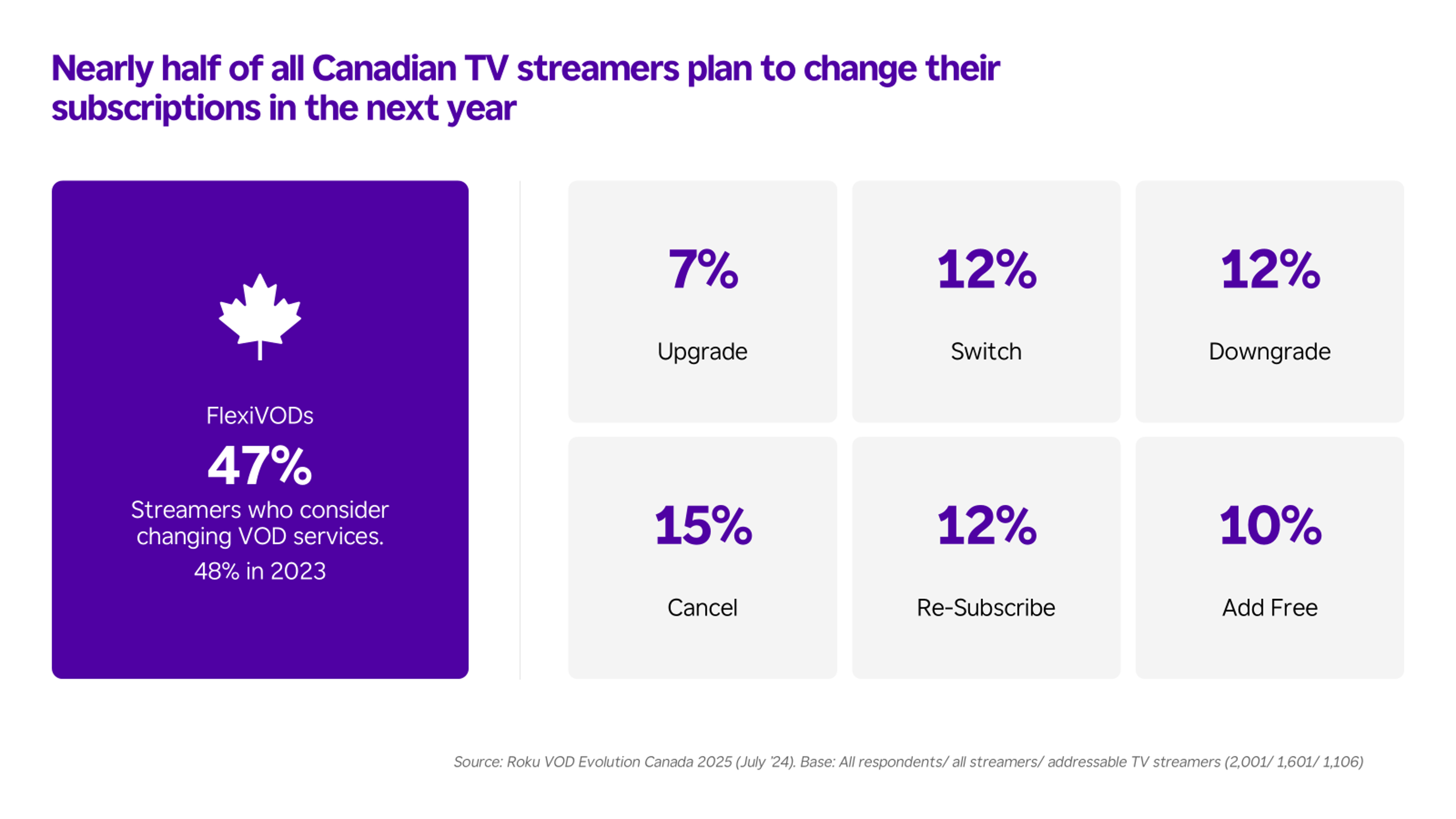
In our Video-on-Demand Evolution 2025 study, we found that nearly half (47%) of TV streamers plan to change the streaming platforms they use in the next 12 months.
We call them the FlexiVODs, and it looks like they’re here to stay – the percentage of FlexiVODs among the Canadian streaming audience has remained steady over the past three years (48% in 2023, 47% in 2022). Churn is now a constant in the streaming ecosystem.
Who are the FlexiVODs, what’s driving their behaviour, and how can brands reach this highly mobile TV audience with effective advertising campaigns?
Who are the FlexiVODs?
FlexiVODs are TV streamers who plan to upgrade, downgrade, switch, re-subscribe, change to an ad-supported tier, or cancel their VOD services in the next year.
Over the years of running this study, we’ve found that younger streamers are more likely to be FlexiVODs – nearly three-quarters (73%) of those aged 18 to 24 plan to make changes to their streaming services in the next year, compared with just over half (55%) of 25-34s and about a third (35%) of over 55s.
Addressable streamers – that is, TV streamers who can be reached with ads – and Roku users, are more likely than average to be FlexiVODs, with just over half of each planning to make changes to the streaming platforms they subscribe to over the next 12 months.
As for how many platforms they’re using, our study found that on average, Canadian TV streamers are using three different types of TV delivery platform each month. From a list of 16 different channels and providers, they use or have used five streaming channels and platforms – fragmentation is real.
Why are so many Canadian TV streamers changing streaming services?
So, why are half of all Canadian TV streamers on the move across services? There are two main reasons: cost and content.
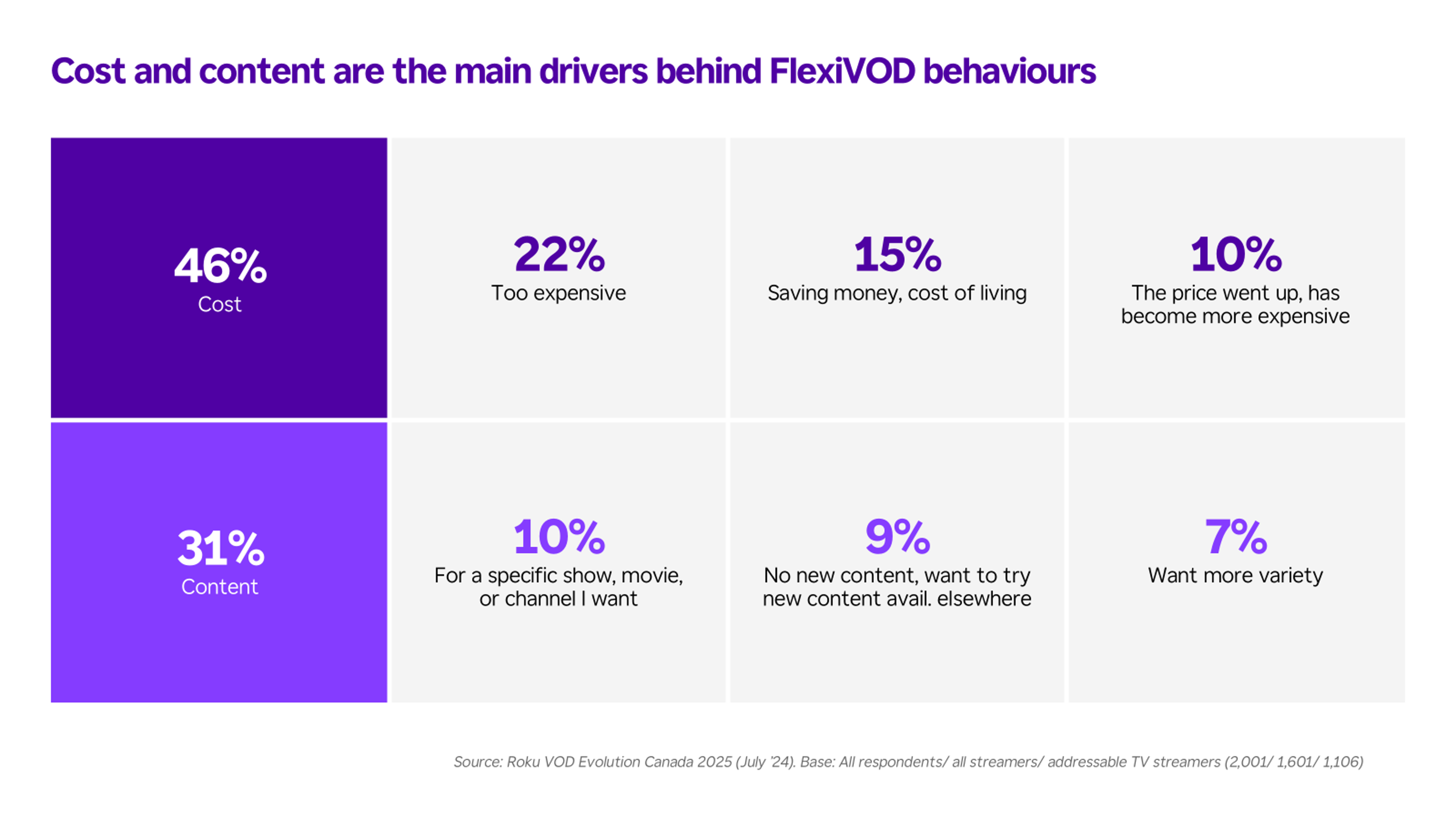
- Cost: Nearly half (46%) of those planning to make a change to the SVOD [subscriber video-on-demand] services in the next year cited a reason related to cost.
About a fifth (22%) said that the service they’re using is too expensive, with 10% saying that it had become too expensive – unsurprising as many platforms have increased the price of subscriptions over the past few years.
About 1 in 7 (15%) mentioned the cost of living, or the need to save money – with inflation remaining high, dollars haven’t been going as far and many Canadians are being more careful about how they spend their money. Our study found that more than half (57%) of TV streamers feel like they have less disposable income than before.
Streamers aged 35 to 54 are more likely than under 35s and over 55s to mention cost as a reason for changing SVOD services.
- Content: Just under a third (31%) of streamers looking to change their SVODs over the next 12 months mentioned reasons related to content.
1 in 10 changed services for a specific TV show, movie or channel they want, while 9% said they just wanted to try new content elsewhere. The desire for variety was cited by 7% of streamers as a reason to change services.
How to reach FlexiVODs with TV streaming advertising
In the past few years we’ve seen the addition of ad-supported tiers as well as platforms joining forces – TV series regularly change hands. As the TV streaming landscape continues to shift – FlexiVOD behaviour may remain steady for years to come.
For brands, this means creating an advertising strategy that works across platforms. Fragmentation across platforms isn’t a problem if the streamer always takes the same route into their viewing experience, such as on Roku.
Brands can advertise in Roku Native Ad spaces, such as the Roku Home Screen and Roku City. Every time a streamer turns on their TV or switches between different apps and channels, streamers will always see Roku’s Native Ads, no matter what content they decide to watch and where. This is an especially important area to advertise in reaching people who only stream SVOD content, ensuring advertisers still have an opportunity to reach them.
Roku’s automatic content recognition lets brands reach audiences they may have missed across other apps, or achieve incremental reach on top of their linear campaigns, making advertising more efficient.
The introduction of lower-priced, ad-supported tiers to streamers including Netflix and Disney+ has expanded the addressable TV audience – more than two-thirds (69%) of TV streamers can now be reached with ads, and more than half (55%) of Canadian TV viewers as a whole. With this in mind, it is not implausible that we’ll see FlexiVOD behaviour among even more TV streamers – advertisers need to be ready.
To find out more about the TV streaming ecosystem in Canada and how it affects how we watch TV, download Roku’s Video-on-Demand Evolution 2025 report.