The TV streaming landscape has transformed significantly in the last 5 years, and if you thought it was dynamic before, expect double to come.
Consumer choice just got even bigger, and with it, more free TV streaming to choose from.
The ‘Streaming wars’ that were tipping in favor of subscription video on demand (SVOD) in 2022 has come back full circle towards more ad supported business models. Consumers are keen to experiment and key Media players announced advertising options coming as soon as December.
Marketers need a line of sight into what consumers' usage and attitudes to video on demand (VOD) will look like in the next 12 months.
Now in its third year, Roku is sharing the results of its TV streaming study. From the ‘State of TV Streaming’ to VOD Evolution and what we believe to be a streaming revolution, 2023 looks to be a full part of the ‘streaming decade;’ a year where marketers will gain more access to reach consumers through ad supported TV streaming.
As of October 2022, the Consumer Price Index — an indication of inflation — had increased by 6.9% in Canada. As Canadians look to cut costs, they’re turning their attention to subscriptions and streaming services are no exception.
There are many moving parts over the next 12-18 months on a global macroeconomic level and this study on the state of Canadian TV streaming focuses on both past behaviours, current perceptions and attributes towards Streaming TV and Streaming TV advertising, and the future intent of Canadian TV streamers.
SVOD business models will continue and advertising will be an integral part of every streamer’s viewing options to consider.
Rise of the FlexiVODs
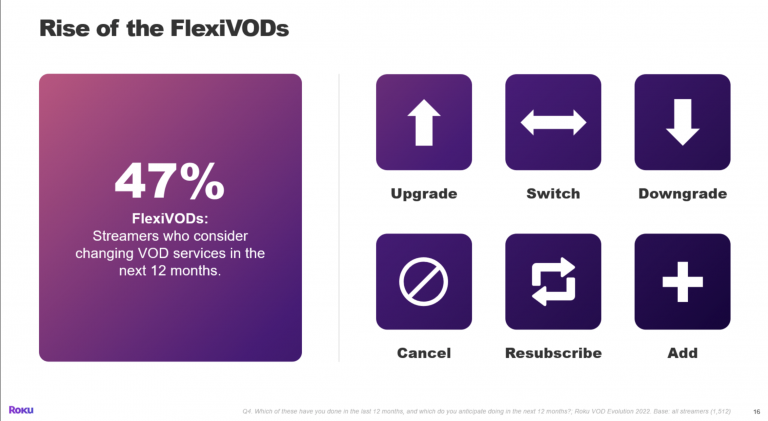
47% Streamers are potential FlexiVODs¹ rising to over half of under 35s who say they plan to consider making changes to their TV streaming / VOD services.
Who are FlexiVODs?
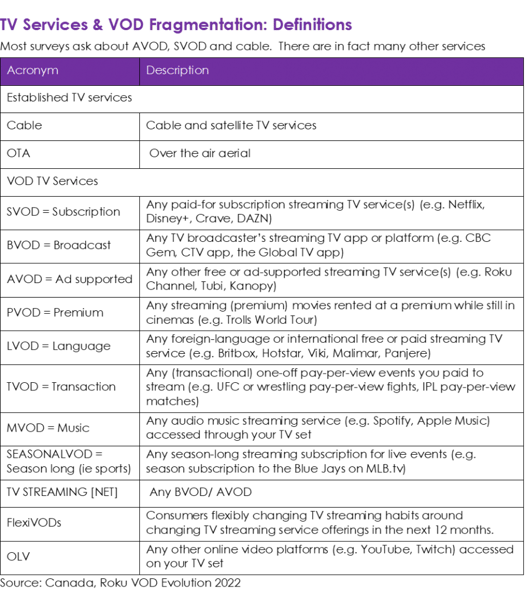
FlexiVODs = consumers flexibly changing TV streaming habits around changing TV streaming service offerings in the next 12 months.
These are TV streamers considering changing VOD services in the next 12 months; whether it is to cancel, switch downgrade from paid to free, upgrade from free to paid, or even resubscribe to services, there will be a lot of movement with TV Streamers. Consumers are experimenting just as much as the companies that provide TV streaming services.
53% of under 35s plan to consider making at least one change to their services in the next 12 months.
Why do FlexiVODs exist?
Be where the programs are
Inflation, increased content choices, changing subscription models, and new entrants have left streamers exploring and re-evaluating their choices.
57% of TV streamers feel they have less disposable income and 60% of streamers are frustrated by the need to subscribe to multiple platforms in order to see all their favorite shows — and this is particularly true among younger viewers under 35 years of age.
Why are FlexiVODs important?
Streamers’ habits are changing as they look for quality content while getting good value for their money. When looking ahead, the younger, more streaming-centric viewers are more likely to both subscribe to new services as well as drop existing services.
50% of those surveyed agree that since the start of the pandemic, they buy more things online and go into stores less. And, as a result of more online shopping, 26% also agree they have changed their grocery shopping habits and the brands they buy.
As consumers open up to more ad supported Streaming TV, the biggest opportunity - the window-shop in the living room - just got bigger via streaming.
It’s more important now than ever before to understand how fickle TV streamers can be and the balance between advertising and subscriptions services needs to be kept in check to remain attractive. In Roku’s VOD evolution study, a host of feedback from TV streamers is covered on what makes for a great TV experience and how to respect the influence of the living room screen.
Key Areas Covered in Roku’s VOD Evolution
Roku is the bridge between this growing segment of streamers, media owners and advertisers.
We are committed to the Canadian TV industry and have invested heavily in proprietary research and cutting-edge tools and technologies in this growing market.
The study covers:
| Modern Life tensions | Profiling consumer modern day tensions to help brands with their comms strategy approach consumers with emotional intelligence and sensitivity in the current climate. | |
| VOD fragmentation: the landscape | Types of TV & streaming TV business models – Access & Usage. New audience behaviour | |
| FlexiVODs | Future look at the next 12 months … where consumers anticipate VOD switching depending on the emerging business models | |
| Distinctly Canadian | Profiling French and international language needs - subtitles, dubbed, local, int'l and what they want more of / less of | |
| Understanding TV viewing needs | TV Meets more needs for more people than other screens -see the comparison | |
| Streaming TV advertising | Usage and attitudes of modern Canadians and advertising on Streaming TV vs other media advertising | |
| Taking TV Ad (Performance Based) Action | TV Ad actions – how brands can measure the impact of TV | |
| Beyond TV: Program value and cobranding extensions | Looking at how consumers engage with Programming IP in real life to market size opportunities and future outlook where we can JV with brands on and off screen IPAAS (IP as a service / licensing). |
Sources:
1 - Q4. Which of these have you done in the last 12 months, and which do you anticipate doing in the next 12 months?; Roku VOD Evolution 2022. Base: all streamers (1,512)