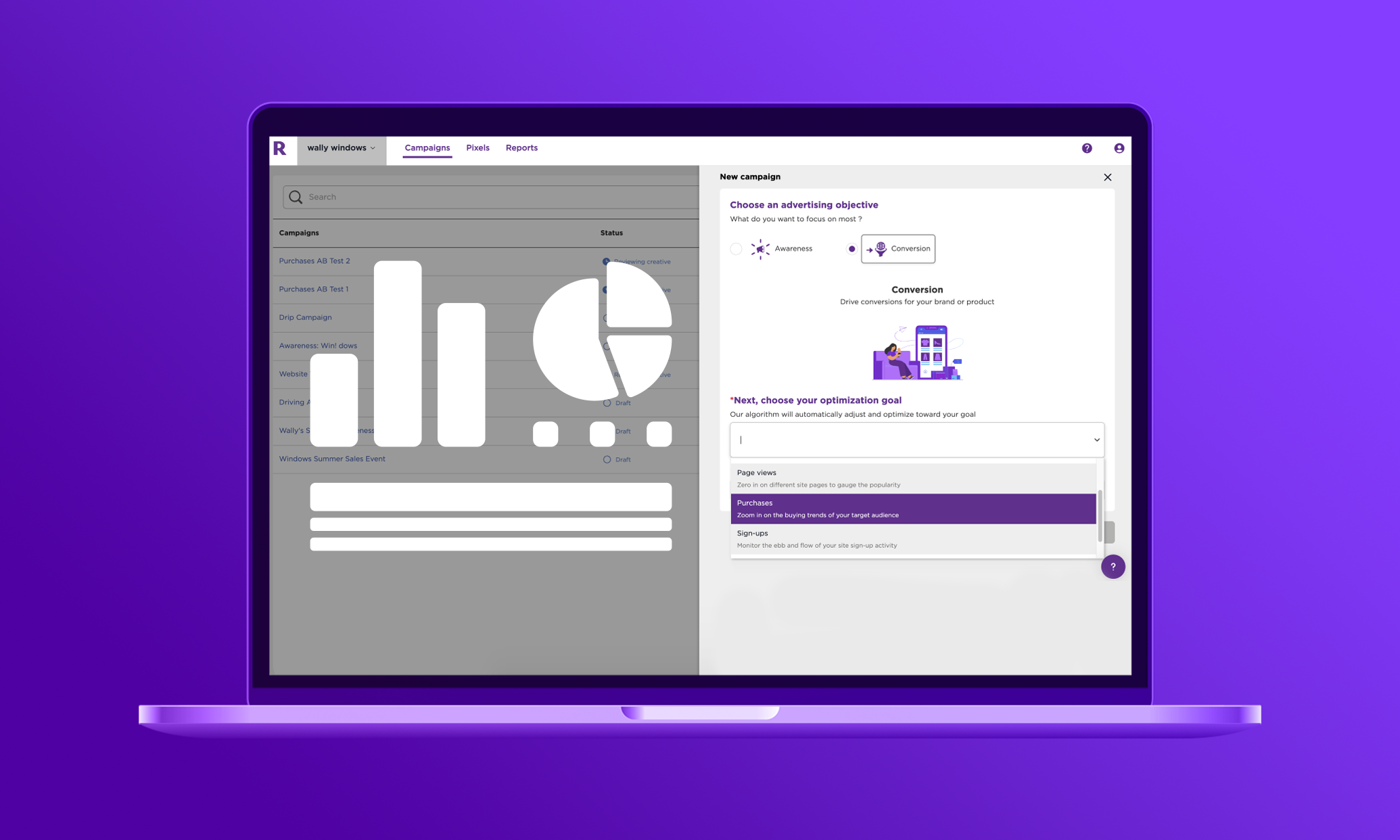
Delve into advanced methods to precisely evaluate the power of streaming ads.
Seasoned marketers know that TV streaming ads have incredible value across the entire buying journey. But demonstrating that value through accurate measurement can be challenging.
Thankfully, brands’ ability to assess ad reach, performance, and ROI has steadily advanced with richer insights and more sophisticated methodologies. Roku offers a number of advanced tools to help data-driven advertisers better measure success and optimize their streaming campaigns.
In an earlier blog post, we offered advertisers who are new to streaming an overview of streaming measurement fundamentals. For advertisers seeking to go beyond the basics, this post will cover areas like automated content recognition and advanced data collaboration.
Exclusive Roku data signals
Roku offers its own exclusive data to advertisers which can be used for pre- and post-campaign insights. Our data assets include powerful automatic content recognition (ACR) technology to track Linear consumption, integrated with Roku devices, as well as our streaming viewership data; both can inform planning decisions, campaign reach and your marketing mix models (MMM).
Roku’s ACR technology. Roku ACR uses opted-in viewing data to help advertisers understand what programming people are watching — and whether an advertiser’s desired audience is primarily active on streaming, linear or both. Marketers can use reach insights from ACR to optimize their campaigns and spending. For example, if the data shows that your target audience is watching one hour of linear per day but spends three hours streaming, it’s time to allocate more budget to streaming ads.
Case study: Sport Chek
Sport Chek harnessed Roku’s ACR and first-party data to target sports enthusiasts and frequent streamers who hadn’t seen their linear ad recently. The brand found the new audience it was looking for, achieving 3.3% incremental reach with Roku households that had not seen the brand's linear TV campaign.
Marketing mix modeling. Although decades old, marketing mix modeling has found new life as the industry looks for a privacy safe alternative to digital attribution. MMM uses statistical analysis to measure how online and offline marketing activities affect sales or other core business objectives. MMM relies on aggregate historical campaign and channel data, rather than user-level data, which has become increasingly valuable as the industry shifts away from third-party cookies and mobile ad IDs. To enable reliable models for streaming TV advertisers, Roku’s MMM Partner Program offers best practices for practioners and an MMM data pipeline. This data pipeline provides source of truth viewing data from Roku’s platform for advertiser models.
Proprietary Roku measurement
Understanding that measurement is intricate and varies between advertisers, Roku supports brands at all levels of sophistication with flexible solutions. Examples include incrementality testing, retail attribution and our extensive measurement partner network.
Incrementality measurement. Incrementality is the gold standard in test-and-learn advertising optimization. Simply put, incrementality can deduce how many customers took action with your brand because of your marketing, accounting for customers who would have converted even if they had not seen your ad. Incrementality is increasingly used as an empirical validation for MMM results. Want to turn advertising on or off in a certain market or a certain media company? We can implement that and help you see how it affected campaign performance.
Case study: Lovevery
Direct-to-consumer toy brand Lovevery used Roku for precise audience targeting. Lovevery then ran incrementality tests to determine the lift in website visits and sales achieved by the ad campaign. After six weeks, Lovevery found that their Roku campaign drove a 72% lift in website visits, a 105% lift in subscriptions, a 170% lift in purchases, and a return on ad spend of $1.56 for every dollar spent.

Retail attribution through Commerce+ partners. Need to measure a sale on a website or retail store? We’ve got you covered. Roku’s collaborations with partners Walmart and DoorDash offer comprehensive insights for marketers. For example, you can leverage DoorDash to measure streaming ad campaigns’ effectiveness on delivery sales.
Case study: Wendy’s
Wendy’s was able to measure order frequency and order value in a campaign targeting adults 18-49 on Roku. By working with DoorDash, Wendy’s achieved an increase in unaided brand and ad awareness. Wendy’s also saw an 11% higher than average order value than non-exposed customers.

Brands can also work with Roku's extensive network of certified measurement partners to target specific audiences and measure campaign success. One example is Kroger Precision Marketing (KPM), which has customer purchase data from Kroger’s 60 million households and 2,700+ grocery store locations. By integrating that data into the Roku ad platform, advertisers can target their campaigns with KPM data and attribute in-store purchases.¹ Brands harnessing this integrated technology report improved sales, household reach, and advertising ROI.
Data collaboration
With our verified first-party data representing millions of active accounts, Roku gives marketers an incredible advantage. By matching our privacy-protected data with our advertisers’ data sources, we enable accurate targeting and outcome measurement.
Clean rooms. Why expose your valuable first-party data when you don’t have to? With Roku’s clean room, a privacy-first data collaboration environment, advertisers can match with our audiences without any direct data exchange, ensuring subscriber information remains confidential. Advertisers and agencies can use their encrypted first-party data to make planning and measuring advertising campaigns easier without relying on cookies or consortiums.
Case study: Neutrogena
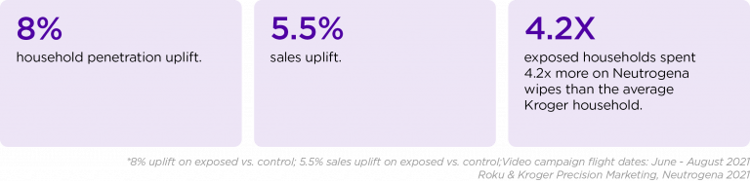
Neutrogena used KPM’s customer purchase data to reach light, lapsed, and current brand buyers — along with cleansing product category buyers — with Roku streaming ads. By leveraging the same KPM partnership to do accurate measurement, the brand was able to confirm the campaign drove an impressive 8% uplift in household penetration and a 5.5% uplift in sales. It also learned that streamers exposed to the video ad spent 4.2x more on Neutrogena makeup remover wipes than the average Kroger household.²
“Roku’s commitment to accurate data and measurement aligns perfectly with VideoAmp’s mission to redefine the way media is optimized and measured. By leveraging Roku’s leading technology and data, we’re able to provide clients with meaningful audience insights, and improve campaign effectiveness both now and in the future.” - Josh Hudgins, Chief Product Officer, VideoAmp
Contact Roku Advertising to learn more.
¹ Roku Expands Kroger Integration with Data-Enabled Private Marketplaces
² The Average Kroger Shopper is the brand spend of the average Kroger shopper in the attribution window.