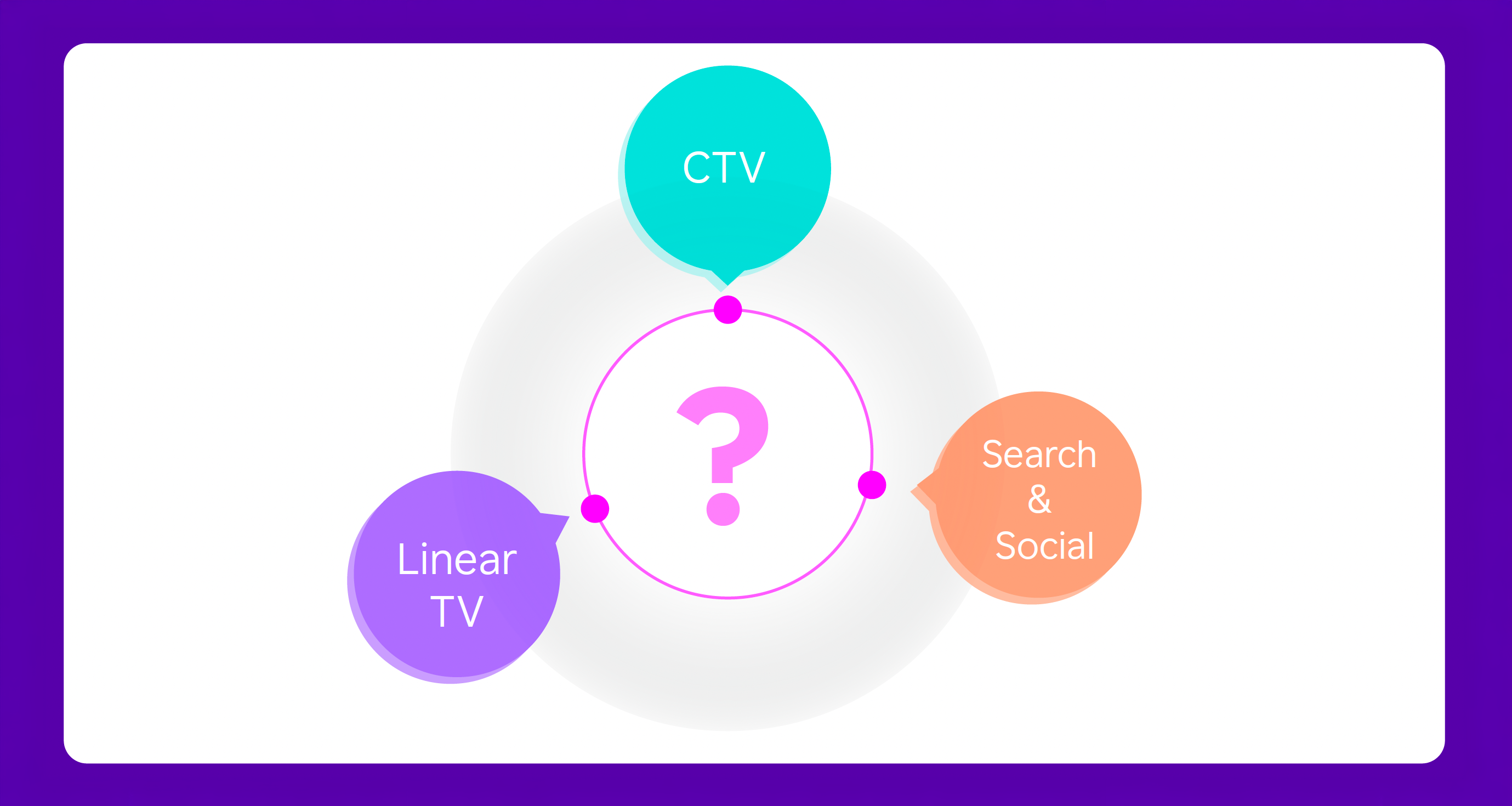
For mobile marketers, every new channel faces the same immediate test. Before it’s evaluated on performance, it has to prove it can be measured.
That’s a big reason social and search platforms like Meta and Google continue to dominate; they understand how to link ad exposures to specific outcomes. CTV, on the other hand, is often viewed differently. It’s still commonly thought of as a strict awareness play with longer feedback loops, less direct attribution, and limited ability to drive conversions. For results-obsessed app marketers, that perception creates hesitation.
But that stigma is no longer deserved. Behind the scenes, CTV advertising has become significantly more measurable, actionable, and aligned with the ways mobile marketers already work. Of course, measuring CTV alongside mobile ads is not without its challenges. For instance, the inability to “click” on most TV ads removes a useful signal that is commonplace in mobile ads.
But in other respects, CTV shows promise as a measurable and impactful growth channel for today’s forward-thinking app marketers.
Let’s examine how streaming ad campaigns integrate with today’s most widely used measurement setups and providers:
The role of MMPs in everyday marketing
For most mobile teams, measurement starts and ends with their preferred mobile measurement partners (MMPs).
Platforms like AppsFlyer, Adjust, and Branch serve as the central source of truth, bringing together data from across channels into a single, consistent framework.
Today’s consumers move fluidly across TV, mobile, and digital touchpoints, but marketers have struggled to connect the dots across channels to the broader user journey,” said Alex Yip, Director of Product Strategy at AppsFlyer. “With AppsFlyer and Roku’s partnership, marketers can achieve multi-touch attribution and cross-channel performance, helping them to prove ROI across every channel, from CTV to mobile and beyond.
MMPs power the core functions performance marketers rely on every day, including:
-
Attribution across channels
- Event tracking from install through conversion
- Cross-channel performance visibility
- Incrementality and lift measurement to understand true impact
This centralized view enables speed and confidence. It’s also why any channel that doesn’t plug into that system introduces friction.
When measurement is fragmented, optimization slows. When data is scattered, trust breaks down.
Benefits of measuring CTV through an MMP
When CTV performance is measured through the same MMP infrastructure as mobile channels, the conversation changes. Instead of evaluating a new channel in isolation, marketers can understand how it contributes to the broader system.
That shift unlocks several advantages:
A single source of truth
All CTV campaign performance lives within the MMP, alongside existing channels. Marketers can avoid extraneous dashboards and platforms.
True cross-channel visibility
Marketers can follow the full journey—from ad exposure on TV to action on mobile, through install and into downstream conversion events. That level of visibility is hard to achieve when channels operate independently.
Clearer incrementality measurement
With tools like lift studies and geo holdouts, marketers can quantify the incremental impact of CTV. That moves performance evaluation beyond last-click and toward a more complete picture of the channel’s contribution.
Performance, not just awareness
CTV’s value isn’t limited to upper-funnel metrics. It also drives installs and post-install events. But it needs to be measured correctly to show that true performance.
Stronger optimization signals
Bringing Roku data into an MMP creates a more complete signal set. As campaigns scale, marketers see improved delivery against core performance goals.

Roku fits into your existing measurement setup
One of the biggest misconceptions about adding CTV is that it requires a new way of working. It doesn’t.
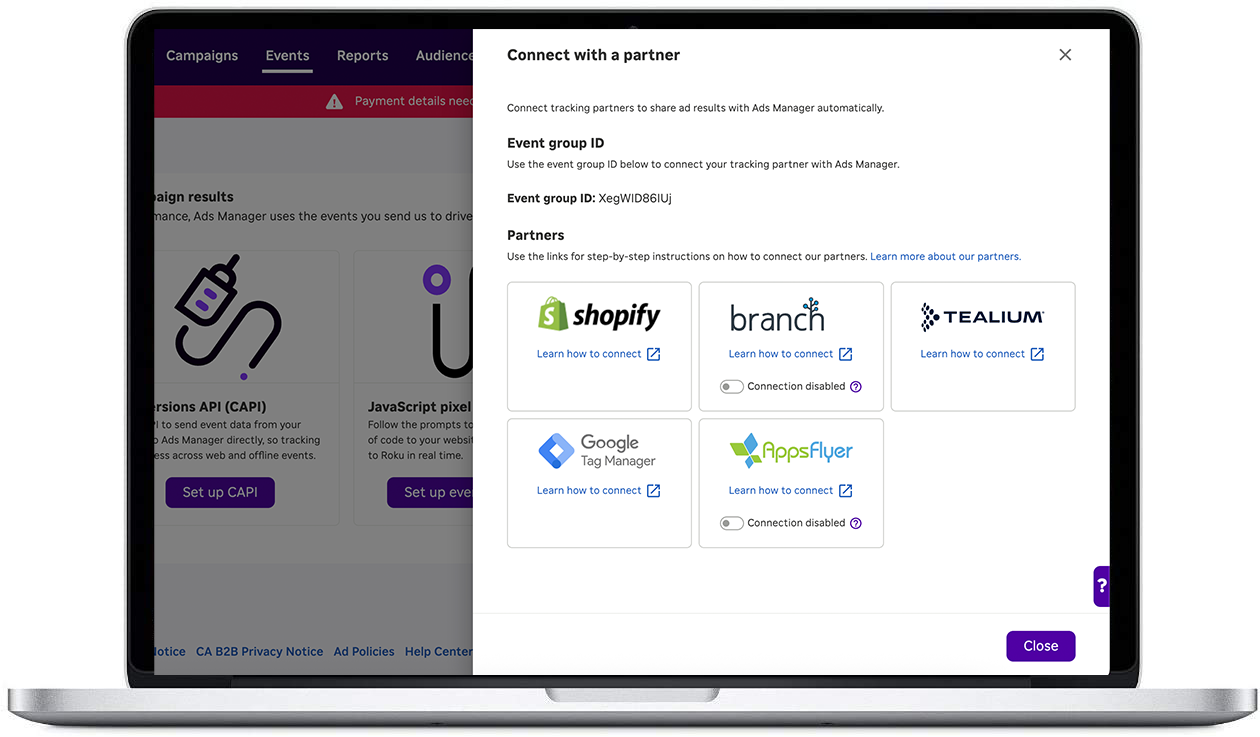
Roku Ads Manager is built to fit into the systems marketers already use. It integrates with leading MMPs, including AppsFlyer, Adjust, and Branch, so teams can continue using the same dashboards, KPIs, and reporting workflows they rely on today.
No new measurement platform required.
That familiarity reduces friction, speeds up testing, and makes it easier to evaluate Roku campaigns using the same benchmarks applied to mobile channels.
How the integration works
From a setup standpoint, the process will feel familiar to anyone running search or social campaigns.
-
App activity and conversion events are tracked within the MMP
-
Roku campaigns connect directly through our existing MMP integrations
-
Roku operates as a self-attributing network, similar to major mobile platforms
-
Setup happens within the MMP interface: connect accounts, select events, and launch
-
Campaign results appear alongside other channels in a unified dashboard
There is one important nuance to understand. CTV attribution is primarily impression-based rather than click-based. Users often see an ad on TV and take action later on another device, without ever clicking.
That difference can influence how results appear in reporting models—and it makes cross-channel interpretation, along with incrementally testing, even more important.
Practical tips for getting started
For teams exploring Roku as part of their mix, a few best practices can help ensure clean measurement from day one:
Track the right events
Ensure installs, sessions, purchases, and subscriptions are properly configured within your MMP.
Align attribution windows
Consistent attribution windows across channels lead to more accurate comparisons.
Start focused
Run a targeted test, not a broad rollout, and give campaigns time to ramp and optimize.
Use incrementality testing
Geo holdouts and lift studies provide a clearer view of CTV’s true impact.
Leverage existing creative
Strong social video or UGC can often be adapted for CTV, making it easier to get started without heavy production costs and effort.
Extending what already works
With MMP integrations in place, Roku doesn’t require a new measurement process or dashboard. Campaign performance flows through the same systems marketers already trust. Results are evaluated against common KPIs, and optimization happens within the same framework.
The result is a more complete view of how channels work together to drive growth.
For mobile marketers, CTV isn’t a leap into the unknown. It’s a natural next step—one that’s measurable, testable, and built on the foundation they already use.
Ready to launch your first campaign?