In 2003, John Battelle coined the term "database of intentions," marking a new era in social science aided by big data from search engines, social networks, and other internet services. This powerful data promised deeper and faster insights into human behavior without surveys or speculation.
Since then, media consumption habits have evolved significantly. Today streaming tops cable TV viewing. In fact, it’s been nearly one year since streaming officially surpassed cable, setting records for share of US viewing time in July 2022.¹
Streaming is a rich medium for understanding audience behavior beyond television. By observing TV searches and viewership behavior on platforms like Roku, we can comprehend a wide range of entertainment experiences and tie them to other behaviors, such as digital commerce. So, knowing that Wednesday viewers are more likely to be fashion trend setters (based on other viewing habits, for example), we might predict what show they’ll take their next fashion cues from, so you can jump on that trend early.
That's why we're launching Stream of Thought, a series of detailed reports and analysis drawn from Roku television and advertising data. We'll study what people are searching, browsing, and watching across all of TV, and connect that data to commerce partner data to see how TV viewership aligns with purchase behaviors.
This data — focused on key audiences, seasonal moments, and major events — will provide better insight across your plan. For example, we’ll explore:
- How trending entertainment “properties” drive travel and tourism demand
- Whether food competition TV viewership translates into supermarket sales
- How major sports tentpole viewership grows the game with new audiences
The scale and richness of our data will create a valuable database of attention. By aggregating anonymized TV data and tying it to other behavioral shopper data, we gain entirely new insights into human expression, interest, and consumption.
What else can we learn?
Streaming moves culture
Television is a mirror to our world; when things happen IRL, people turn on their TVs to continue the journey. For example, on King Charles' coronation day, "coronation" was the top-searched term on Roku, surpassing the next most popular event, “Kentucky Derby,” by 66%. Interestingly, streaming demand for titles like "The Crown," "Diana," "Harry & Meghan," and "Kingsman: The Secret Service" also spiked week over week.²
This connection between real-world events and entertainment offers profound insights into what motivates consumers. By anticipating these moments, you can adapt your communications strategies to align with your audience’s interests.
Television is also a window to new worlds. Households that searched for Netflix’s “Formula 1: Drive to Survive” series in the past year on Roku were 4.6X more likely than average to tune in to a Formula 1 Grand Prix race on traditional TV in May 2023.³
Streaming's impact can extend beyond television, as demonstrated by the HBO series “The Last of Us.” Each episode's premiere coincided with a spike in play of the game on which the show is based, showcasing the interconnectedness of streaming and related industries.
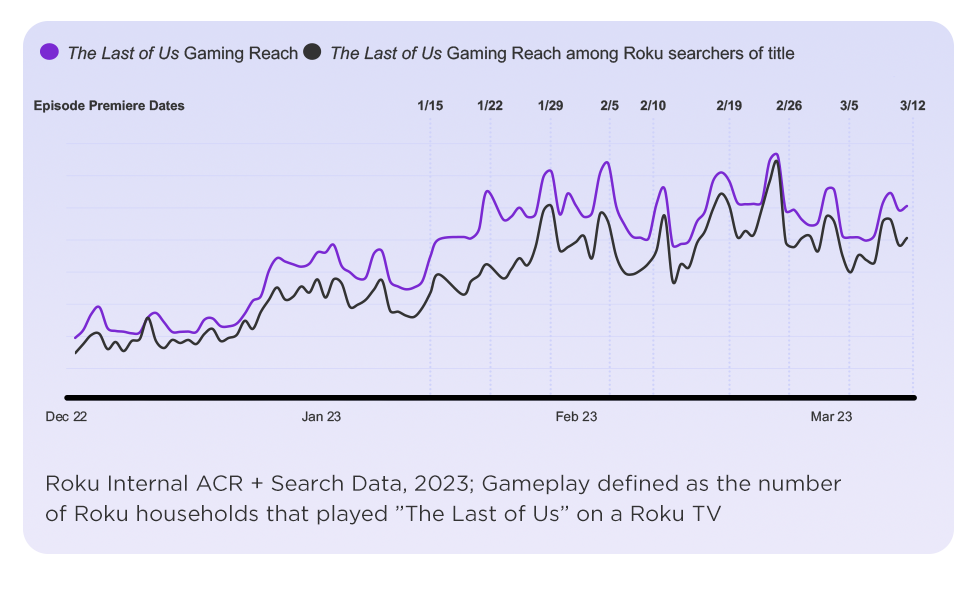
The takeaway? If you plan and measure TV by title, channel, or TV medium in isolation, you're missing audience insights beyond those common delineations. And, if you're not looking at how major moments impact follow-on TV viewership, you're missing the full effect of your marketing—and opportunities to extend reach and impact.
Streaming drives business
Demand for Sicilian tourism spiked following the HBO premiere of the second season of “The White Lotus,” set in Italy. Streaming's impact goes beyond pure entertainment. Similarly, sneaker marketplace GOAT saw a 68% increase in Air Jordan sneaker sales in the week the docuseries “The Last Dance” debuted on Netflix.
Roku has long worked with marketers to better understand the connection between their customers’ attention and intention. For example, Roku onboarded retailers’ CRM data to understand search and viewing patterns of their shoppers compared to Roku streamers. One found that when search rankings of “Top Gun: Maverick” and “Minions: Rise of Gru” led the charts, younger Gen-Z audiences favored romance titles like “Love Island” and “The Notebook.”⁴
The takeaway? Analyzing your customers’ media habits, from the most loyal to the hardest-to-win, can help you understand those personas more richly and develop media opportunities that re-engage and convert trialists to loyalists.
Streaming shapes behavior
If you're like me, you've stepped out of a taxi forgetting to pay after using ride-sharing mobile apps. Technology shapes our behavior, and new habits often extend beyond the devices and platforms where they originated.
We believe that streaming has a similar effect.
Blockbuster movie releases have driven interest in past titles in franchises from “The Fast and the Furious” to “Batman.” Is streaming-led nostalgia impacting design and fashion trends with the reintroduction of older entertainment? Likewise, how will younger generations’ unfamiliarity with traditional linear TV ad breaks impact their receptiveness to marketing communications? We've only just begun to explore these questions and streaming’s full impact on culture, business, and behavior.
We hope you’ll follow our Stream of Thought series here on Roku Advertising and join the conversation on LinkedIn, where we’ll share our latest and invite your ideas for new topics and ideas to explore. If you haven’t yet we encourage you to subscribe to our email newsletter, The Stream, where we will feature many of these insights.
¹ Streaming Tops Cable-TV Viewing for the First Time
²¯³ Internal Roku data, May 2023
⁴ Internal Roku data, August 2022 | Roku overall vs. Brand Customers | P18-34