Audiences are streaming in record numbers—but where, when, and how they watch is changing faster than most marketers can track. From subscription hopping to shifting between ad-supported and premium tiers, today’s streaming behavior is anything but predictable.
Roku recently partnered with MAGNA Media Trials to understand how advertisers can break through in a fragmented, choice-heavy streaming landscape. Our research findings challenge conventional thinking about TV — and make a compelling case for rebalancing how marketers approach their cross-platform media buys.¹
Let’s dive in.
Free streaming commands premium ad attention
One of the clearest takeaways: Ads in free streaming command just as much viewer attention as those in paid streaming environments, such as Disney+ and Peacock, that have evolved to include ads. Across viewability, visual attention rate, and visual ad attention, the differences were statistically negligible—less than one percentage point, according to our analysis of over 16,000 viewers.
That’s a major signal for advertisers who equate premium content with paid access. Instead, viewers are increasingly turning to free options like The Roku Channel, which offers a mix of trending series like The Kardashians and longstanding favorites like Law & Order and The Walking Dead.
And the free streaming audience is only growing. Over half—or 59%—of consumers now use at least one free ad-supported streaming service regularly², and the global audience for free streaming channels is expected to reach 1.1 billion users by 2029.³
The growth is fueled by a practical truth: subscription fatigue is real. As paid services pile up, viewers are reconsidering which monthly costs are worth it. For many, free content with limited ads isn’t just acceptable. It’s preferred.
Free streaming fuels exploration, not just entertainment
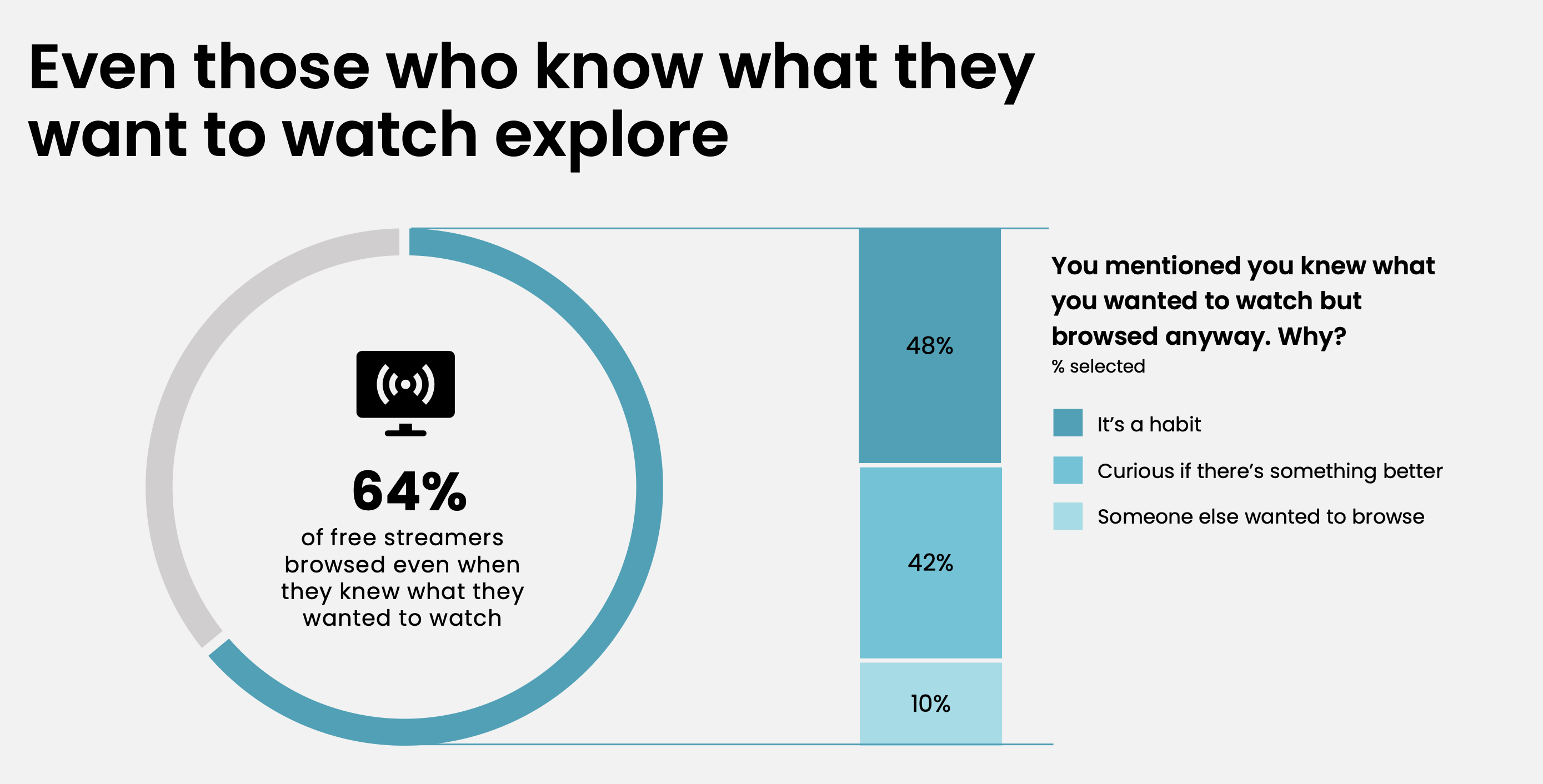
Free streaming doesn’t just change what people watch; it reshapes the viewer mindset. Instead of heading straight to a specific title, viewers on free streaming channels are more likely to browse and explore. Our research found that 64% of free streaming viewers still browsed before selecting a title, even when they already knew what they wanted to watch.
Viewers in “discovery mode” present a strategic opportunity for advertisers. In these moments of openness, brand messaging has a better chance of landing before attention narrows in on a show.
Platforms unify attention across viewing models
For decades, advertisers focused their buys on primetime evening TV, when the largest audiences tuned in to a handful of cable and broadcast channels. But this approach has significant drawbacks in 2025.
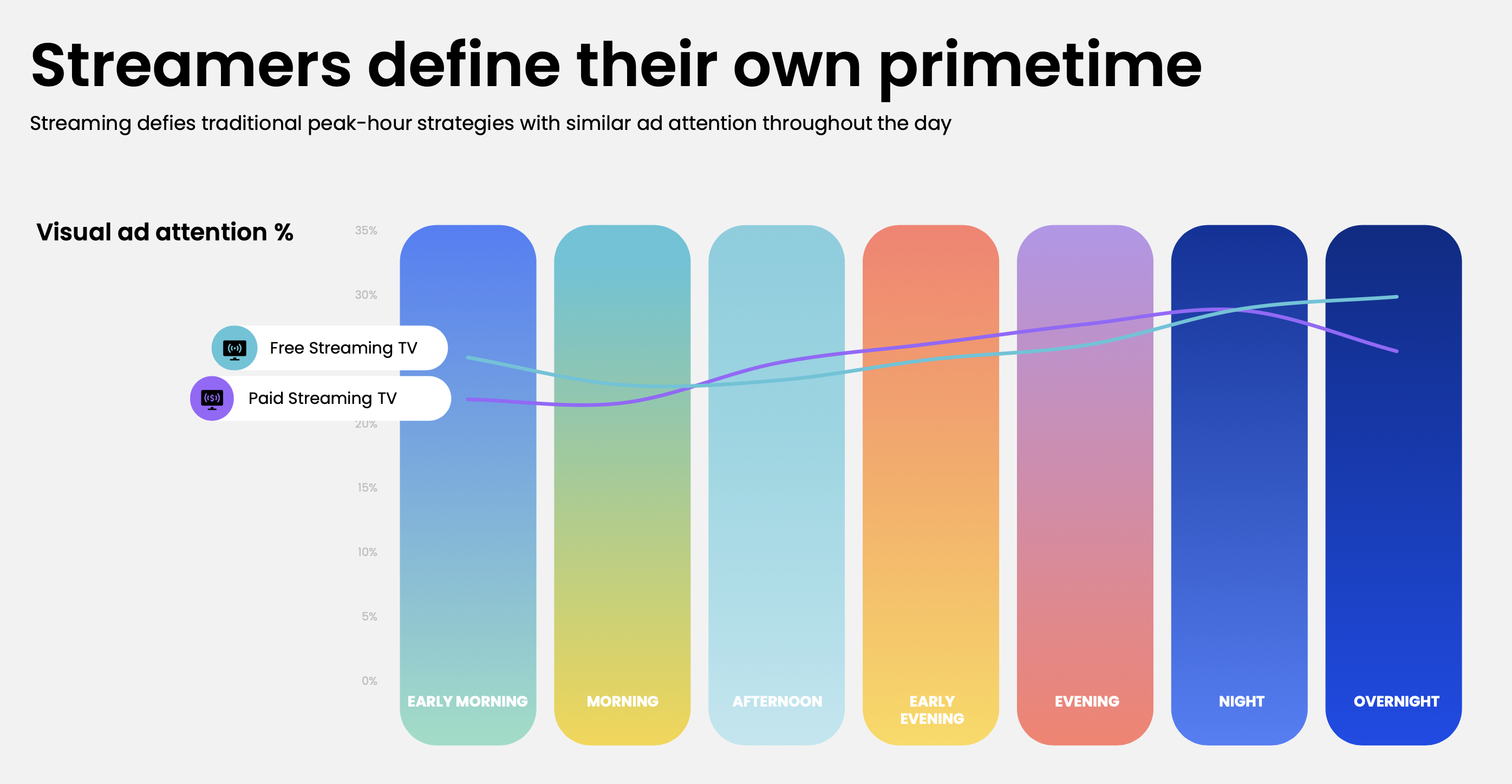
Today, “primetime” is in the eye of the streamer. Roku and MAGNA found that visual ad attention remains steady throughout the day, defying traditional peak-hour dayparting strategies. Additionally, ad attention peaks every 24 hours, likely because viewers tune in habitually at the times that suit their routines.
To maximize attention and impact, advertisers should diversify their ad placements across free and paid viewing models and avoid condensing their exposures within a narrow time window. Brands get approximately 18% more attention when the same person sees an ad on two viewing models instead of just one. This is true even with only two exposures.
While this may sound overwhelming, ad buyers can simplify the process by adopting a platform approach. By using their DSP to buy and optimize inventory programmatically, they can connect with desired audiences regardless of channels and day parts.
The free streaming audience is more diverse than you might expect
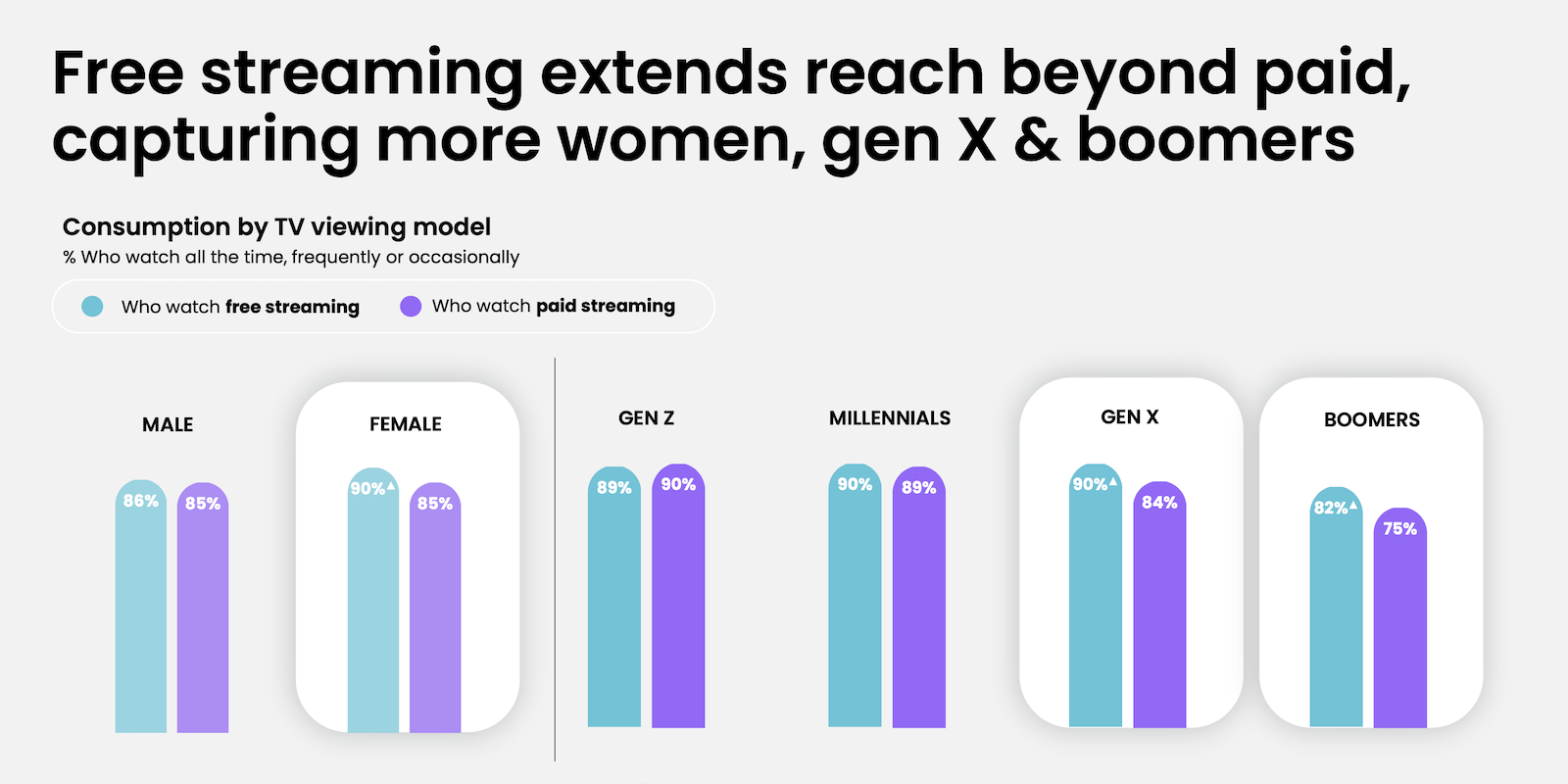
While Gen Z and Millennials are known for embracing affordable streaming options, free streaming also outperforms paid streaming in reaching Gen X, Boomers, and women—groups that may still watch linear TV but increasingly use free streaming as a supplement. Roku and MAGNA’s study found that free streaming reached 6% more Gen X and 7% more Boomers than paid streaming.
Plus, 81% of Gen Z say that watching ads is a fair trade-off for access to free streaming content. That willingness is a green light for brands hoping to engage younger viewers through ad-supported formats.
Channel hopping is the norm—not the exception
Today’s streamers are constantly reshuffling their media mix. They’ll subscribe when a buzzy show like House of the Dragon or Ted Lasso drops, then cancel once the season ends. Data from the MAGNA/Roku study reflects this behavior:
- Viewers add or cancel an average of four streaming subscriptions per year
- They use an average of nine streaming services at any given time
- One in three streamers modified a subscription in the past three months
- More streamers (44%) added a subscription service than canceled (36%) in the past three months
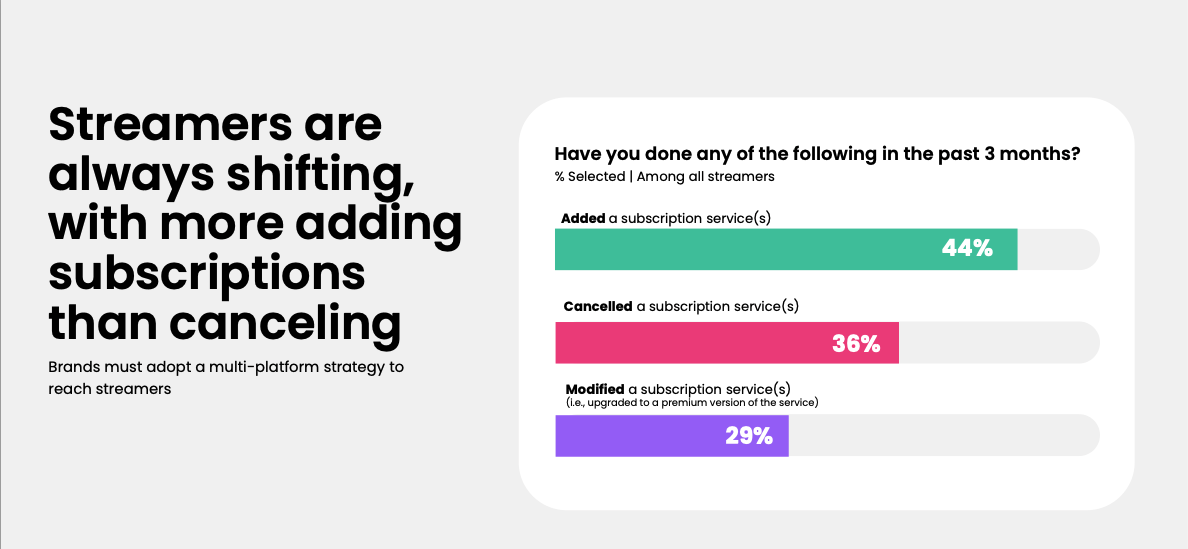
Such volatility has big implications for ad strategy. If your plan hinges on a single platform or paid tier, you’re likely missing out. The most agile audiences—particularly Gen Z—are rewriting the rules. They’re 4.7x more likely than Boomers to modify a subscription and 2.2x more likely to add one.
To keep up, your media plan needs to flex with your audience—not just chase them.
How brands can adapt: take a platform approach
Free streaming is no longer just an entry point—it’s a high-value environment for attention, discovery, and incremental reach. Whether viewers are catching up on the latest series, flipping through free content, or rewatching nostalgic favorites, brands can stay present across every screen and streaming behavior.
Want the full story? Download the complete Media Trials study to explore all the insights and implications.
¹ MAGNA Media Trials + Roku: TV Attention Deconstructed, 2025
² Roku Internal Data, 2025
³ Statista: Free ad-supported streaming TV (FAST) - Worldwide, 2025