This year's Consumer Electronics Show (CES) buzzed with discussions about the evolving landscape of streaming entertainment.
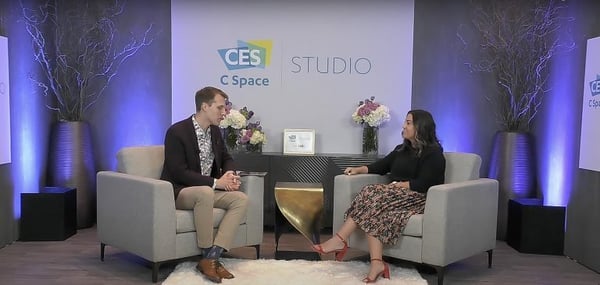
In panel discussions and interviews, experts from Roku provided clarity for marketers. Among other topics, our team addressed shoppable TV streaming ads, shifting sports audience demographics, and strategies to engage viewers beyond traditional TV.
Read on for our key insights from CES 2024.
1. Streaming will be the entry point for all TV
As TV viewership shifts from linear to streaming, content discovery has undergone massive changes. For example, on traditional TV, a hit series or NFL game airing ahead of a show almost guaranteed solid viewership for that post-game programming, said President of Roku Media, Charlie Collier. “Now, Roku is taking over that role in audiences’ watch decisions,” he said during a CES interview with Variety co-editor-in-chief Cynthia Littleton.
That’s due in part to scale, as 75M+ active accounts on Roku stream TV and movies.
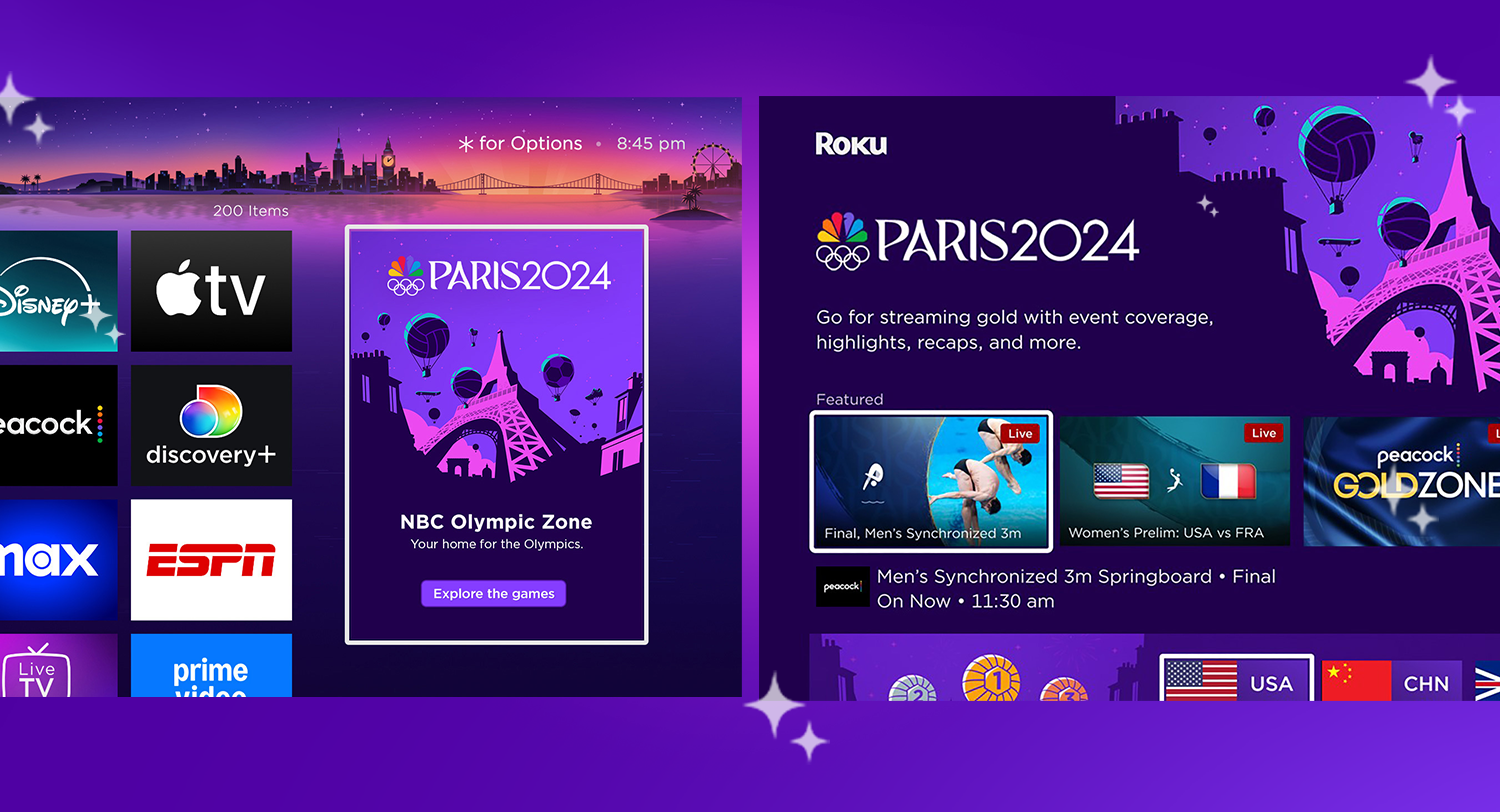
“Almost half the broadband households in the country, before they do anything, they hit the ‘on’ button and take a Roku journey,” said Collier. That journey allows Roku to provide a variety of paths to content discovery. For season three of The Morning Show, for example, Apple launched a home screen takeover and content hub to attract new and existing viewers.

Collier sees Roku’s position as a platform and content creator as a serious advantage that will help more content — and advertisers — become unmissable.
“We are proudly ad supported,” he said. “I want to make sure Roku builds things that are good for the consumer, good for the business, and good for the partner so they bring us their passion projects — and that’s going to happen more and more.”
2. Win on streaming by simplifying content discovery
TV streaming allows marketers to go beyond traditional ad formats. From content hubs to shoppable TV, marketers have innovative new options to gain attention and add value. In 2024, expect more advertisers to take advantage, according to Roku's VP of Global Advertising Sales and Partnerships, Kristina Shepard.
“Right now, marketers are predominantly putting their linear spot into streaming video channels they know and love,” she said. “But there’s so much more they can do by taking advantage of the whole streaming experience.”
Consider this: The average viewer spends more than 10 minutes deciding what to watch, causing 20% of viewers to give up and do something else. In turn, wise marketers are helping them discover great content. Coca-Cola, for example, was the launch sponsor for All Things Food, a hub with cooking competitions, recipes, and adjacent content such as films like Julie & Julia and Ratatouille. Rather than forcing streamers to hunt through individual apps for content, this experience made it easy to find them all in one place.
“Some of the biggest challenges are content curation and content discovery. Content discovery hubs make content available in one or two clicks away from power on vs. seven or eight,” said Shepard. “They dramatically ease decision paralysis and provide a clear opportunity for content hub sponsors to rise above the noise.”
3. The rising influence of women in sports viewership
Unless you’ve been living off the grid, you know that Taylor Swift and Travis Kelce are dating. But did you know that “Swelcie” has created new NFL fans? In fact, viewership among 18-49 year-old women jumped 63% after Swift first attended a Kansas City Chiefs game this season, according to Roku's Head of Integrated Brand Partnerships, Katina Papas Wachter, during a talk at CES.
It’s indicative of a larger trend of women driving new sports viewership. Consider this: The 2023 women’s basketball championship got the 6th highest unique reach across both men and women’s hoops. Smart marketers are putting together plans to attract and retain these new fans.
“Now that these women fans are there, how are we continuing to capture them and engage with them?” said Papas Watcher. “It all starts with the audience, so there are a lot of forces at play here to keep the momentum going on for years. Making sure that media organizations ban together to continue that is really important.”
The first step is making sure fans can access the games, as 18% can’t easily access live women’s sports matches.¹ To ease the accessibility challenge, Roku launched the Women’s Sports Zone, aggregating women’s sports offerings and adjacent content like female-focused sports documentaries or movies.
“It shows that there are sponsorship opportunities for brands to help users discover sports which are typically challenging to find,” she said. “We believe sports viewership will only increase and create opportunities for partners and sponsors to empower, amplify, and represent women athletes.”
4. Women aren’t a single audience cohort
Once they develop an audience strategy to reach female audiences, what creative and messaging strategies resonate the most? Roku’s Director of Ad Marketing and Creative Solutions, Rachel Helfman, emphasized the prime importance of authenticity in messaging with female audiences.
“It’s easy to relate to brands when we feel like they are telling the truth,” Helfman said.
She said marketers should appeal to a wide range of interests.
“I like skateboarding, I’m also a mom of a little girl and I lead marketing for my career but that isn’t everything about me,” said Helfman. “The more brands can show different women with different passions and hobbies, the better their messages will resonate.”

Helfman also urged marketers to use data-driven insights to guide their marketing to women. Take women’s sports for example. Roku data shows that 30% of sports fans said they are watching more women’s sports than in the previous five years, while 85% said it’s important for women’s sports to continue gaining popularity. Stats like these prompted Roku to launch the Women’s Sports Zone featuring live and upcoming women’s sporting events as well as female-focused documentaries and content — a great place for a sponsor to reach a growing group of female consumers.
“Let the numbers and insights speak for themselves,” she said, “and remove any of your own biases.”
Subscribe to our newsletter to receive more updates from Roku Advertising.
¹ Nielsen