Born between 1997 and 2012, Gen Z is already a critical audience for marketers. This cohort’s spending power has steadily risen since it first entered the workforce a few years ago, climbing from $143 billion in 2018 to $360 billion in 2021. But Gen Z’s true economic might is still in its early stages. Its direct spending is projected to reach $2 trillion by 2030.
To learn more about how this generation consumes content and responds to advertising, Roku teamed up with Luth Research for an expansive survey of 16- to 25-year-olds. This research revealed that TV streaming is one of Gen Z’s main leisure activities — and the ads they see while streaming help them discover new products and follow through with purchases. Luth also found that Gen Z streams more TV than any other generation, multi-tasks while they consume content, and would make purchases on their TVs if given the opportunity.
Let’s dig into the data.
Gen Z is the first generation of TV streaming natives
Gen Z is the first generation to grow up with streaming. Many are too young to remember the transition from cable to streaming. For these individuals, streaming is not an emerging medium; it’s simply the way they watch TV. Our study validated that trend, with 76% of Gen Z watching video on demand streaming channels on connected TVs (CTV) while only 28% watch live TV on cable.¹
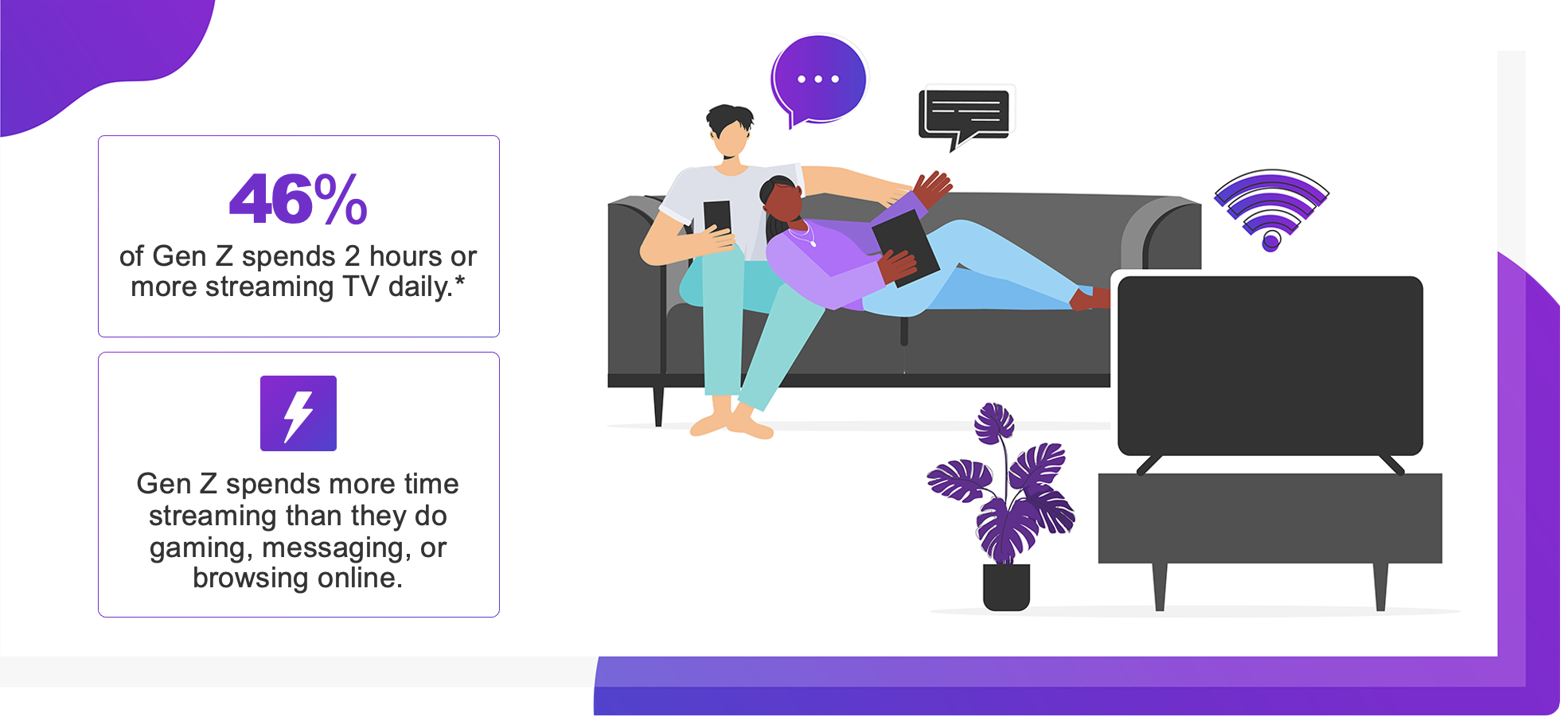
Furthermore, streaming TV has become one of the main daily activities for Gen Z.
TV streaming ads are a hit with Gen Z consumers
Our survey revealed that TV streaming ads influence Gen Z consumers at every stage of the purchase funnel — from discovery to intent to conversion.
Nearly half (45%) talked about an advertised brand or product with others while 46% looked up information or product reviews online.² Best of all: 35% have purchased a brand or product after seeing it featured in TV streaming ads.³
It’s important to note that Gen Z consumes content and ads differently than other generations. Paying attention to multiple screens at once is natural for these consumers. Seventy-nine percent of Gen Z consumers multitask while streaming, typically checking social media or browsing online, according to Luth’s research.
With attention spans so fragmented, marketers may be perplexed at how to reach this generation. But TV streaming offers a strategic advantage compared to other tactics. Streaming ads not only appear on TV but can also be targeted across devices, including phones, tablets and computers. Plus, emerging technology from Roku and Microsoft Advertising can determine how streaming TV ads impact online searches and browsing behavior on these devices — delivering improved return on investment (ROI).
Another way to boost ROI is to add interactivity to streaming ads. In fact, one in three Gen Z streamers say they want the opportunity to interact with ads directly through their TV streaming device, such as by scanning a QR code or tapping their remote to purchase.
Content and value are the biggest considerations for Gen Z streamers
With rising inflation and housing costs, Gen Z is forced to be thrifty. One study found that Gen Z has 86% less purchasing power than Baby Boomers did in their 20s. This dynamic means value should be at the front of marketers’ minds when reaching out to this generation.
One way to do this is to help subsidize their content and entertainment choices. Nearly three-quarters (73%) of Gen Z streamers are willing to watch ads in exchange for access to free movies or TV shows, our study revealed. Such offers resonate, as 66% are more likely to remember ads that offer something valuable like free or discounted content, and 63% are more likely to consider buying products from those brands.⁴
The results are clear: If you’re targeting Gen Z consumers, TV streaming ads should be a growing part of your marketing plans. Gen Z spends hours per day streaming and the ads are proven to help them discover new products and make purchases. In the months and years to come, Gen Z’s purchasing power will only increase, and our data suggests that streaming will continue to be one of their go-to forms of entertainment.
Brands that add value with their marketing campaigns and capitalize on technology to target them across devices have the best chance to capture their ever-fragmented attention and convert them into customers.
To learn more insights from Roku Advertising, subscribe to our newsletter.
¹¯⁴ Luth Research, Profiling the Gen Z Consumer, May 2022