In the battle for consumer attention, social media and streaming TV beat out most other channels. But effectively orchestrating messages across CTV and social apps can be a challenge.
Approximately seventy percent of advertisers agree that both CTV and social media are essential to a successful media strategy,¹ and research reflects that both platforms often work together to inform purchasing decisions.
As a leader in ad-supported reach, Roku is dedicated to understanding the streamer journey. We partnered with Luth Research to learn more about how consumers think about social media and streaming TV. Below, we highlight some of our key findings to help advertisers better understand how to use both social and streaming to stand out in a fractured media landscape.
Mindset matters
Social apps and streaming TV are where consumers spend the majority of their media time, but streaming is a slight favorite with 3.5 daily hours spent, compared to 2.8 hours on social media.² And yet the most important differences between the channels lies not in time spent, but rather in emotional and attentional nuances.
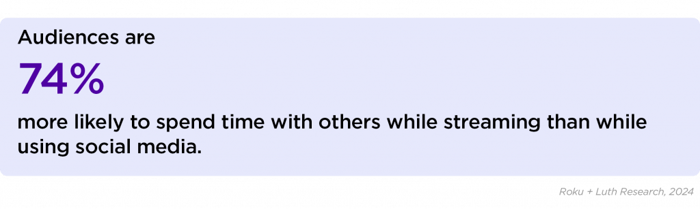
When streamers fire up their TVs, they’re in very different mindsets than social media users reaching for their phones. Majority of streamers report being calm and engaged while streaming TV.³ And ironically, streaming is considered more social than social media. Audiences are 74% more likely to spend time with others while streaming than while using social media.⁴
Many of us are familiar with the sinking feeling that can accompany scrolling social media. One in 4 social media users report feeling negative, detached emotions while they scroll.⁵ The people we surveyed are more likely to use social media out of boredom or because they simply stumbled across it.⁶
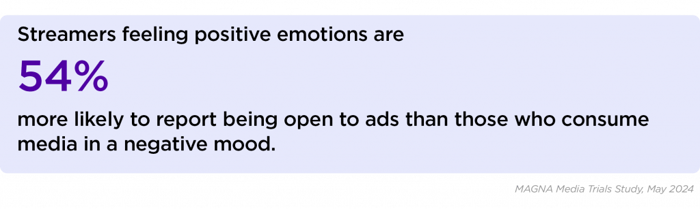
What’s the significance of this positive mindset while streaming? Well, research shows that positive moods lead to more openness and receptivity around advertising. Streamers feeling positive emotions are 54% more likely to report being open to ads than those who consume media in a negative mood.⁷ Given the strong, positive associations with streaming TV, advertisers should capitalize on opportunities to reach audiences when they’re feeling relaxed and engaged –– and therefore more receptive to advertising.
TV is where brands build trust
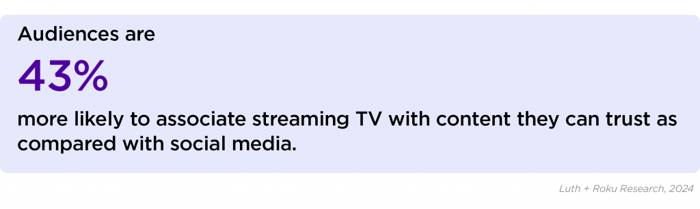
Consumers may spend near-equal time streaming and scrolling, but the content they find can be wildly different. Audiences depend on streaming for premiere, high quality content,⁸ and are 43% more likely to associate streaming TV with content they can trust as compared with social media.⁹
Meanwhile, social media is associated with unreliable, lower-quality, and even shady content at a much higher rate than streaming TV.¹⁰ Recently, some social platforms like X (formerly Twitter) have felt the effects of increases in negativity and bot-generated posts. More than a quarter of advertisers plan to reduce spending on X in the coming year.¹¹
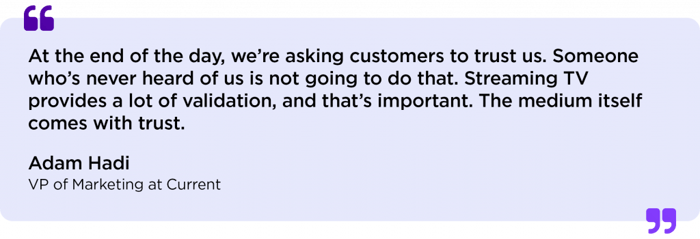
For advertisers, trust is currency. When consumers trust a brand, they’re far more likely to purchase their product or otherwise engage. And the same dynamic holds true for platforms associated with trust and reliability; brand messaging is considered 37% more credible on TV than on social channels.¹²
Advertisers can leverage the trusted reputation of the TV screen to boost perception of their brand on social media as well.
Better together
In our screen-saturated world, many people watch TV with a phone in their hand. Eighty-three percent of American TV watchers report using a second device when streaming,¹³ and 61% of Roku‘s audience scrolls social media while streaming.¹⁴
But rather than being a distraction, people often use their phones to explore a brand or visit the website of an advertiser they saw on streaming.
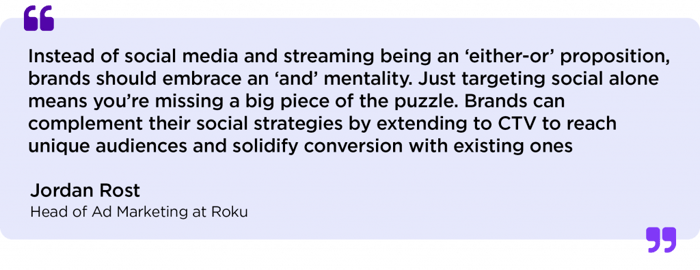
Social media and streaming are best used together as part of a holistic, omnichannel approach to advertising. Advertisers should picture the consumer journey as a waving line that journeys between social media ads, streaming ads and placements in other channels. Leaving out either social or streaming strategies from a media plan means you’re missing a critical piece of the consumer’s daily experience.
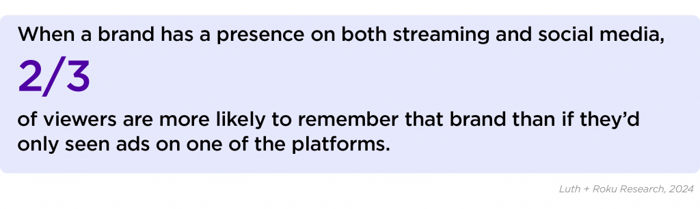
When a brand has a presence on both streaming and social media, two-thirds of viewers are more likely to remember that brand than if they’d only seen ads on one of the platforms.
Advertising on both social media and streaming ensures you amplify your message across the full consumer journey, catching consumers across different moods and mindsets throughout their day – the two strategies truly are better together.
Unify your streaming and social ads
If you’re already adept with social media advertising, it’s easy to leverage existing creative assets and campaigns to launch a CTV campaign. As the lead-in to all TV, Roku can help brands expand their reach and engage audiences from the moment they fire up their TV through their streaming journey.
Check out Roku's easy-to-use Ads Manager or reach out to your Roku rep.
¹ IAB's 2024 Digital Video Ad Spend and Strategy Report; IAB, Advertiser Perceptions, and Guideline
²⁻⁶ Luth + Roku Research, 2024
⁷ MAGNA Media Trials Study, May 2024
⁸⁻¹⁰ Luth + Roku Research, 2024
¹¹ Kantar, 2024
¹² Lucid/Cint Study, 2024
¹³Pervasive Second-Screen Habit Opens CTV Opportunities", MediaPost, March 2021
¹⁴ Luth + Roku Research, 2024