
Executive Summary
Streaming TV reached new heights in 2024, with expanding audience reach, a tsunami of sports rights, and more Caitlin Clark than anyone was expecting. These advances have created new ways for advertisers to engage audiences, and Roku is here to help you identify and act on these opportunities.
As the lead-in to TV, Roku enjoys a bird’s-eye view of the marketplace, with the best TV experience for viewers and mass scale for our partners. With 85.5 million streaming households worldwide, we are uniquely positioned to read the tea leaves on the future of TV.
No two streaming households are exactly alike. Some are 100% dedicated to sports. Others range freely across comedy, drama, and reality. As a mom of two, I can confirm that many of us are head over heels for kids’ programming. In fact, “Bluey” continues to be one of the most-searched shows on Roku quarter over quarter.1
Regardless of how our users choose to watch, the Roku Experience is proudly ad-supported and drives results.
We’re excited to share our 2025 predictions and analyses, which we hope will be a valuable resource for your team as you navigate the year ahead.
Wishing you a happy and successful 2025!

Sarah (Warner) Harms
VP of Advertising and Marketing
Roku
Prediction #1: "Lean back" makes a comeback
Good news for advertisers worried that the future of TV is ad-free: It isn’t happening.
Netflix was steadfastly ad-free for most of its existence, and it wasn't alone. Amazon Prime Video didn’t show ads, nor did Disney+ when it launched in 2019. This led many advertisers to conclude that streaming and subscription video on demand (SVOD) are one and the same—and sparked concerns that cord-cutters were becoming unreachable on TV.
Instead, nearly all major SVOD services embraced ads—and so have viewers. Today, 88% of Roku households in the U.S. stream free, ad-supported content across dozens of channels. 2
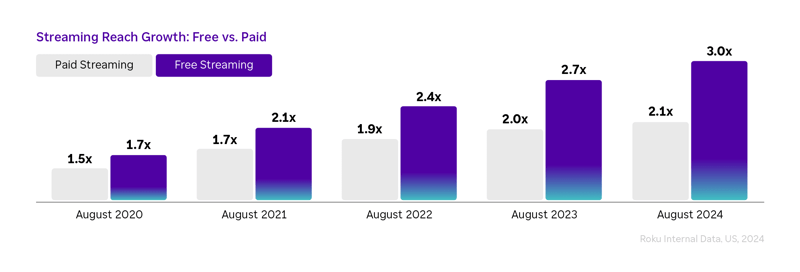
In 2025, Roku believes the majority of streaming will be free and ad-supported.3 And some of the biggest gains will accrue to lean-back viewing experiences.
Let’s dig into this prediction.
The revenge of 'lean back' TV
In 2024, viewers flocked to entirely ad-supported channels like Tubi, The Roku Channel, YouTube, and Pluto TV.

Sam Armando, EVP
Within the larger ad-supported streaming landscape, we see the fastest growth among live, linear viewing experiences, often via an electronic program guide (EPG). On The Roku Channel, the reach and total streaming hours of these channels grew faster than video-on-demand viewership.4
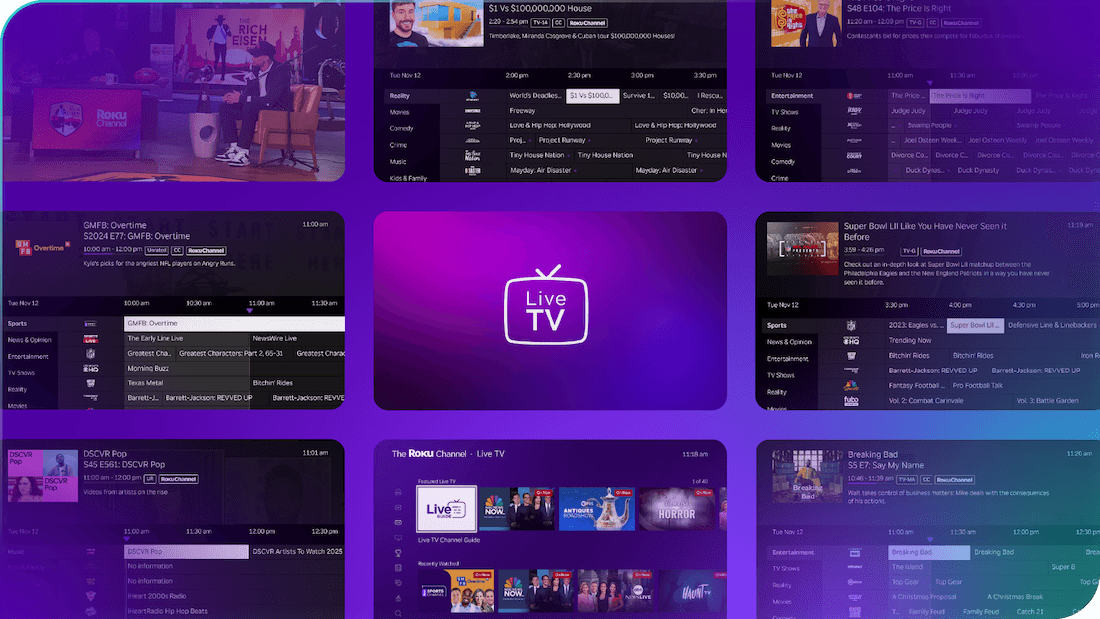
It’s worth pointing out that many free TV channels resemble linear TV in some ways, offering a pre-programmed feed with defined ad breaks, accessible through an EPG that calls to mind traditional cable program guides. In addition to being free, channels like MrBeast and Tastemade offer “lean back” viewing that leaves much of the decision-making to programmers.
The Roku Channel alone has more than 400 live free channels available.
Often, viewers seem happy to watch whatever's playing; they're not always picky about what channel or even what show is streaming. Live TV, free TV, FAST, or whatever you choose to call it, has become the new cable. It gives audiences the news, sports, and other content they once found on linear TV and streaming apps at the lowest possible price point (free) whenever they want to watch.

Sweta Patel, VP, Marketing and Merchandising
Prediction #2: Sports streaming takes fan engagement to the next level
2024 was another massive year for sports streaming: a record-breaking NFL season kickoff,5 a dramatic increase in Olympics streaming,6 and the most-watched NCAA women’s basketball tournament in history7 (as well as the first time the women’s tournament title game outdrew the men’s).8
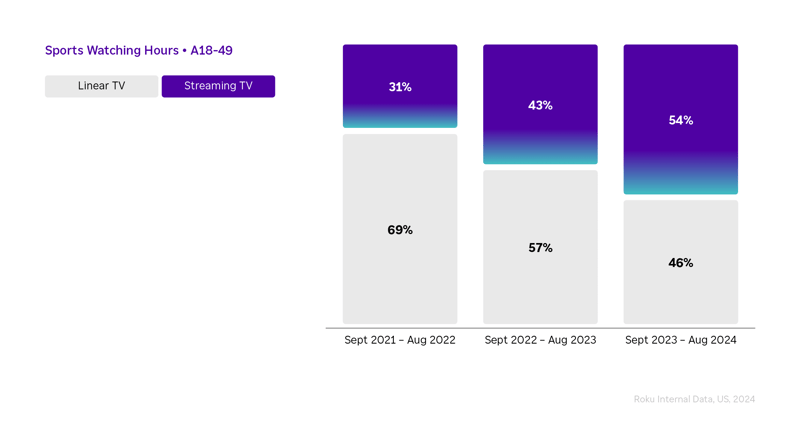 As streaming services gobbled up more and more sports rights, fans tuned in. For the first time, people 18 to 49 years old spent the majority of their sports viewing time (54%)9 watching via streaming—up from 31% just two years earlier.10 If growth rates continue, we believe two out of three sports hours will be streamed in 2025.11
We expect to see an inflection point for sports streaming in 2025 as rights holders adopt a streaming-first ethos. The fan experience will become flush with new levels of personalization and interactivity.
To break this prediction down, it makes sense to start with the growing popularity of sports as a whole.
Joe Franzetta, Head of Sports
We anticipate the shift to streaming will trigger important second-order effects, among them a much richer fan experience. Teams and leagues will leverage the streaming platform to engage audiences with personalized content, interactive features, and data overlays. Think gamification, commerce, sports betting.
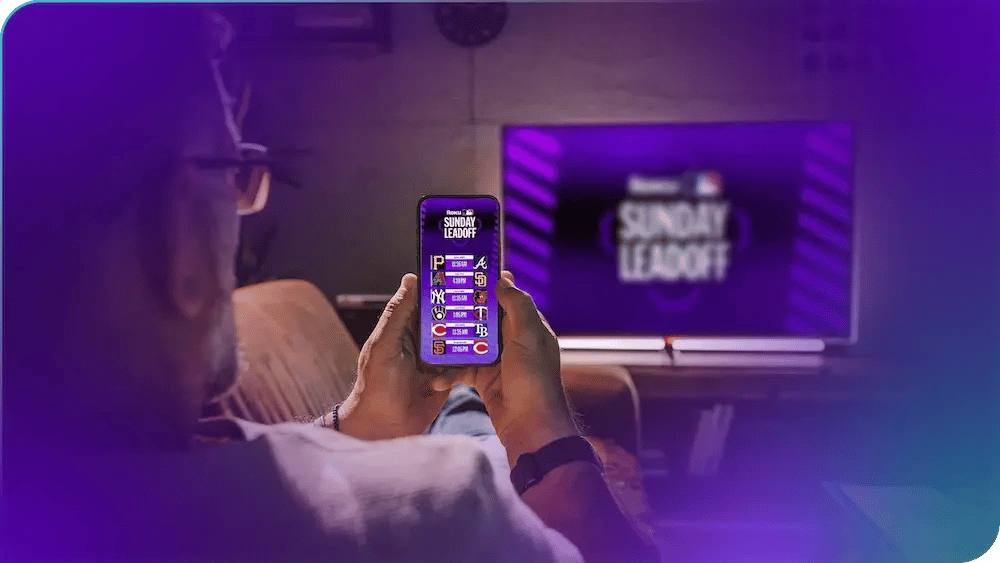
Next year, we predict that fans will be able to watch a game, place a bet on their favorite team, or buy game tickets with a few clicks of their remote control or mobile phone. This interactivity will be available not just in the discovery journey, but via overlays on the games themselves.
This new interactivity will create an opportunity for leagues of all sizes to find new fans and reward their engagement.

Aarti Dabas, Chief Media Officer
We'd like to call out another important second-order effect of sports rights moving to streaming. As we all know, the shift of sports to streaming has created confusion for fans. Football games, for example, are scattered across Amazon Prime Video, Peacock, ESPN+, and broadcast cable.
Streaming has made progress toward solving this fragmentation problem. This began with Zones, such as Roku’s MLB Zone and NBA Zone, which made sports content easier to navigate.
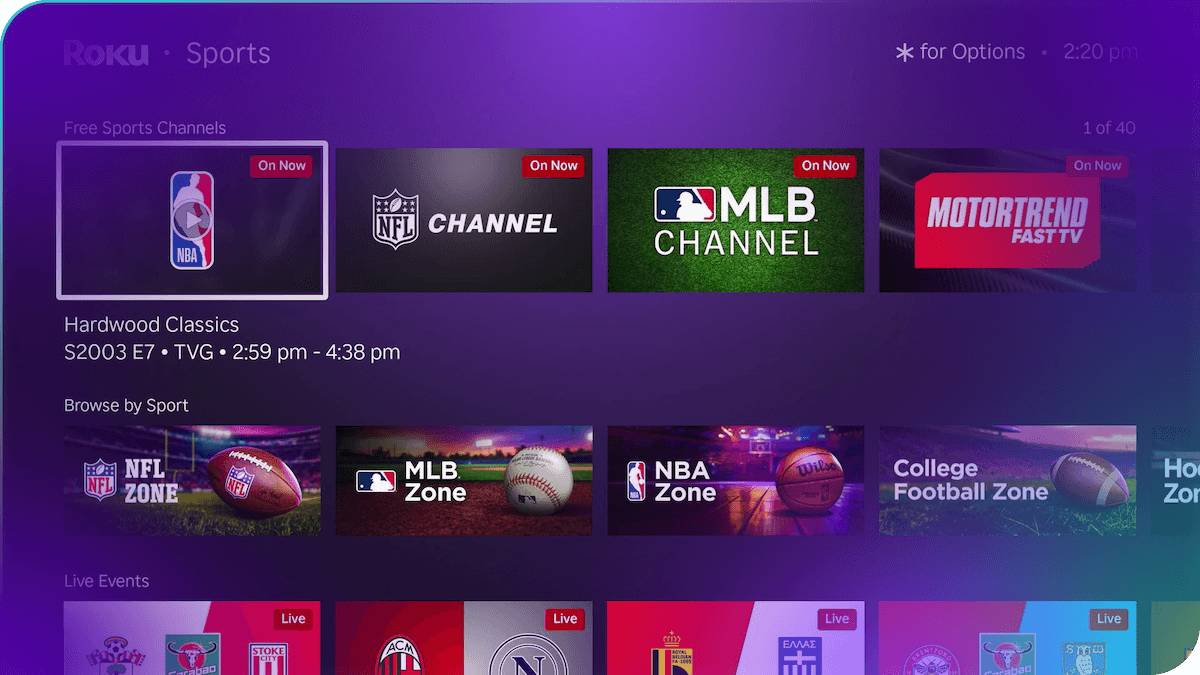
To make progress in interactivity and discovery, sports leagues will need to lean into technology and data. This will require investments and partnerships with enabling platforms in areas like sports merchandise, ticketing, betting, and more.
Prediction #3: Programmatic CTV grows up (and gets held accountable)
Programmatic CTV is nearing maturity, with steady advances in available inventory, bid density, and measurement.
About three-quarters of all CTV transactions have been programmatic in 2024, according to the Interactive Advertising Bureau, as advertisers sought scale, optimization, and ROI. Advertisers want to use their preferred demand-side platforms to find their customers on Peacock, Roku, Pluto TV, Netflix, Amazon Prime Video, and other platforms. These platforms have responded by bringing more premium inventory to the biddable marketplace, along with the data and insights needed to enhance targeting and prove out results.
The growth in programmatic has been helped along by a wave of technology innovation—like clean rooms and data partnerships—that elevates targeting and transparency in the streaming ecosystem. Advertisers now routinely require that data be portable and comparable across platforms. This helps them understand which of their ads perform and which do not, driving greater accountability in CTV.
With these tools, the programmatic benefits marketers have long enjoyed in digital and online video are now easily available on the TV screen. This broad availability will put pressure on big walled gardens in TV to become more transparent. Once advertisers can standardize their audience-buying across most of the ecosystem, they’ll insist on more privacy-friendly ways to get transparency from the holdouts.
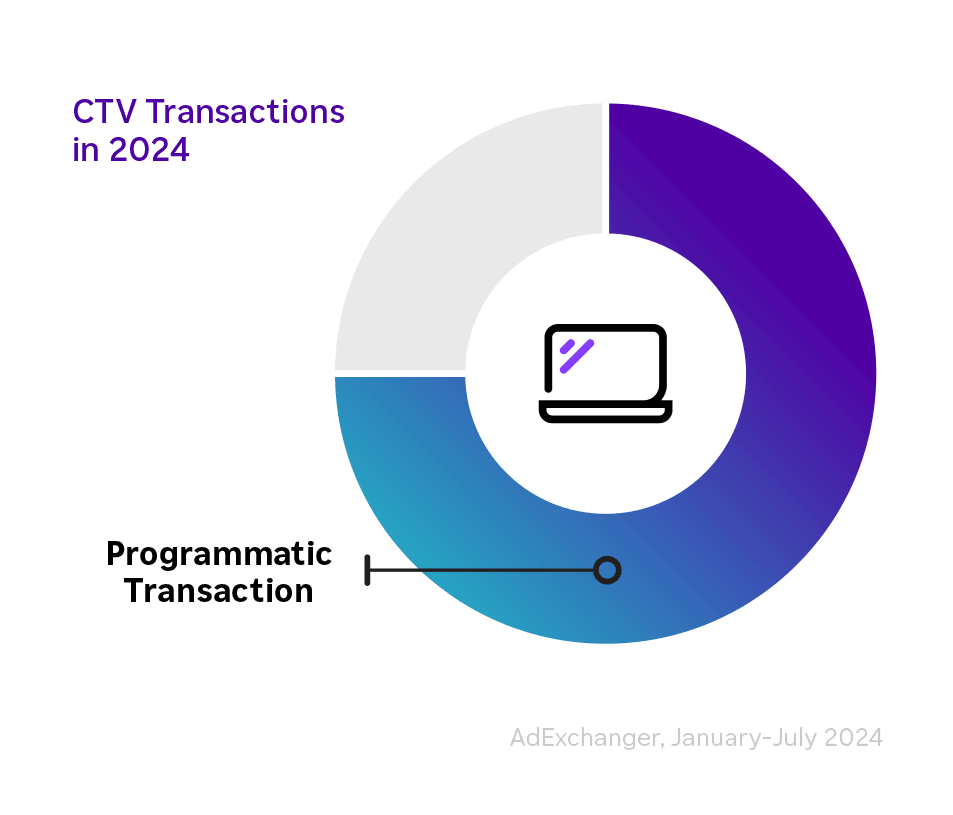
With this maturity comes greater accountability. In 2025, we predict advertisers will demand to understand their streaming campaigns’ real contribution to marketing KPIs—and plan future investments accordingly.
Miles Fisher, Head of Advertising Partnerships
Even as advertisers double down on programmatic in 2025, we believe custom formats will remain an important carve-out for brands that want to embed their messages more deeply within streaming platforms. Marketers will be able to measure these custom formats alongside standardized programmatic video ads using their preferred measurement and data collaboration tools.

Samantha Rose, EVP and Strategic Investment Lead
For marketers and agencies across the board, the single biggest factor driving adoption of programmatic CTV may be the opportunity to more easily measure outcomes of streaming campaigns alongside other channels.

Moe Chughtai, Global Head of Advanced TV
Prediction #4: 20,000 new advertisers come to streaming TV
Historically, brands needed deep pockets and extensive partnerships to advertise on TV. Supply constraints, high costs, and friction in the ad-buying process all conspired to keep smaller brands out of the marketplace.
By contrast, walled gardens like Google and Facebook have built simple yet performant self-serve platforms that serve millions of advertisers. These platforms offer a low barrier to entry for small and medium-sized businesses around the globe.
In 2025, we predict a meaningful fraction of these digital advertisers will launch their first streaming TV campaigns, bringing an estimated 20,000 new marketers to the biggest screen in the home.
Growth advertisers have tested streaming for years, but new dynamics are poised to usher in a group of first-time streaming advertisers who are here to stay.

This trend has already begun. Disney revealed in its Q1 2024 earnings report that its global advertiser base for Disney+ had surpassed 1,000 for the first time,[14] and NBCU-owned Peacock has seen a 40% increase in the number of advertisers on its platform.[15] Meanwhile, Paramount currently serves thousands of advertisers, with plans to more aggressively court the SMB market, Paramount Advertising COO Steve Ellis told The Current.[16]
New-to-streaming marketers will be drawn in by the availability of self-serve tools—such as Roku Ads Manager—that make it easy to set up, activate, and pause campaigns. Other companies, like Waymark and Streamr.ai, use artificial intelligence to help advertisers create complete video ads if they don't have the budget for full-spot production.
Peter Hamilton, Head of Ad Innovation
There’s another factor drawing mid-market advertisers to streaming: cost. The amount of streaming inventory hitting the market has grown due to new entrants such as Amazon Prime Video and Netflix, along with growth in FAST channels. As supply increases, ad costs for run-of-network inventory have come down. We anticipate that inventory pricing in combination with low minimum spend requirements on self-service platforms will further lower the barrier to entry.
Agency VaynerMedia is actively experimenting with streaming ads on behalf of its performance-focused clients, using capabilities like Action Ads that allow marketers to easily include a clickable overlay with a call to action.

Jon Morgenstern, EVP and Head of Investment
Churn has always been a factor in streaming TV, but it has become endemic as prices rise and serial churners get better at toggling their streaming subscriptions on and off to get the shows they want at minimal cost.
In 2025, we predict that media and entertainment companies will lean into consumers’ demand for flexibility by experimenting more aggressively with new pricing tiers, incentives, and bundling strategies. This will significantly reduce churn rates and increase profitability.
2024 taught us, once again, that viewers are more loyal to content than they are to the streaming services that deliver it. Across shows and platforms, we see declining levels of loyalty to streaming services coupled with a growing focus on specific movies and shows.[17]
After “The Super Mario Bros. Movie” left Netflix in October 2024, searches for the movie on Roku jumped 24% the following week. This demonstrates a savviness on the part of viewers as they seek to follow their favorite films and shows to whichever platform holds the streaming rights.
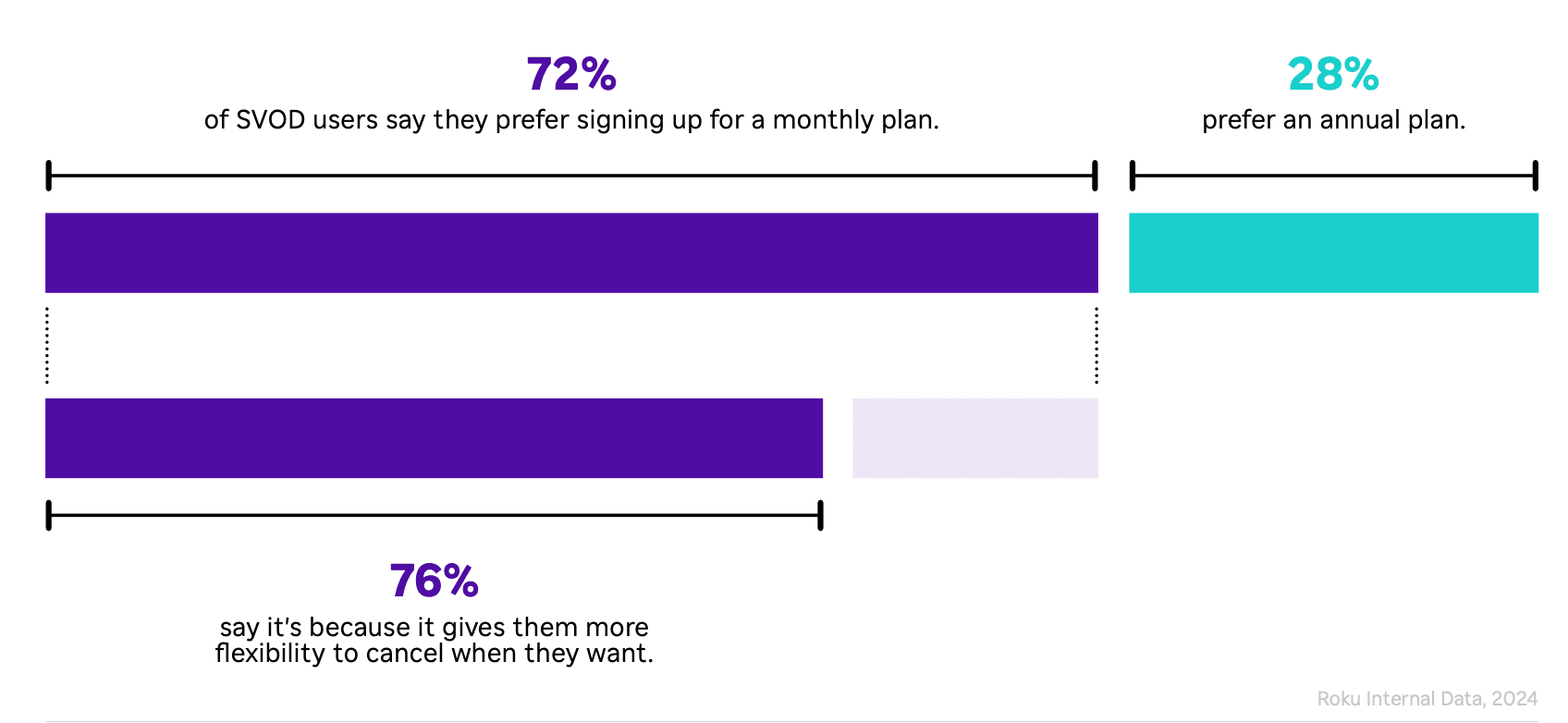
Seventy-two percent of SVOD users say they prefer signing up for a monthly plan versus 28% who prefer an annual plan. Among those who prefer monthly, 76% say it’s because it gives them more flexibility to cancel when they want. Among those who prefer an annual plan, 90% say it’s because it offers greater cost savings.
This has been a long time coming. Streaming services across the board have raised prices as they pursue profitability, and these increases have motivated higher churn. When a top streaming service announced a price increase in 2024, the volume of cancellations on Roku that day increased by 109% compared to the average number of daily cancellation requests for the year.
Tedd Cittadine, SVP, Streaming Services Partnerships
Streaming services have gotten creative with bundles that entice subscribers. For example, Disney offered Disney+ subscribers a free dining plan in early 2024 when they bought select four-night packages through Walt Disney Travel Company, but we could see the company easily baking in theme park discounts for Disney+, Hulu, or ESPN subscribers.
To address churn head-on, SVODs will find ways to accommodate people who want a limited engagement with their content and distinguish these audiences from loyal subscribers. Imagine a “House of the Dragon” package for the duration of the season, which cancels automatically, at a higher price point per month than a year-long commitment. And we expect to see more bundles with off-platform services, such as DraftKings bettors who receive game discounts.
As media and entertainment services solidify their business models, they’ll abandon today’s growth-at-all-costs mindset and provide—profitably—what streamers want: choice, ease, and great content.

Annie Luo, EVP, Global Partnerships & Strategic Development
Conclusion
The advancements we've seen in streaming TV over the last 12 months have teed up an exciting 2025 for our viewers, partners, and brands.
Viewers will get more of the content they love, with an experience that puts them at the center. And our partners and advertisers will be able to leverage broadcast-level reach, leading-edge formats, and advanced technologies to help them meet their goals.
From our vantage point, the streaming ecosystem is evolving to better support consumer choice and privacy, while creating powerful new opportunities for advertisers and content providers. We can't wait to share more data, insights, and expertise to help you own the streaming journey in 2025.
The foregoing contains “forward-looking” statements that are based on our beliefs and assumptions and on information currently available to us on the date of publication of this article. Forward-looking statements are not historical facts, and include statements relating to, among other things, predictions relating to advertising developments in 2025. Except as required by law, we assume no obligation to update these forward-looking statements publicly, or to update the reasons actual results could differ materially from those anticipated in the forward-looking statements, even if new information becomes available in the future.