
Multi-touch attribution (MTA) is a bottom-up method that distributes credit for a conversion across the individual touchpoints that preceded it within a defined lookback window. It’s correlative, not causal, which makes it a fast, always-on fit for in-flight optimization.
MTA answers one question well: how do individual touchpoints share credit for a conversion, and what’s CTV’s role in the path? It answers accurately only when its logic can see an unclickable channel. Here’s how to set up your MTA to credit streaming correctly.
What MTA does: attributing credit across touchpoints
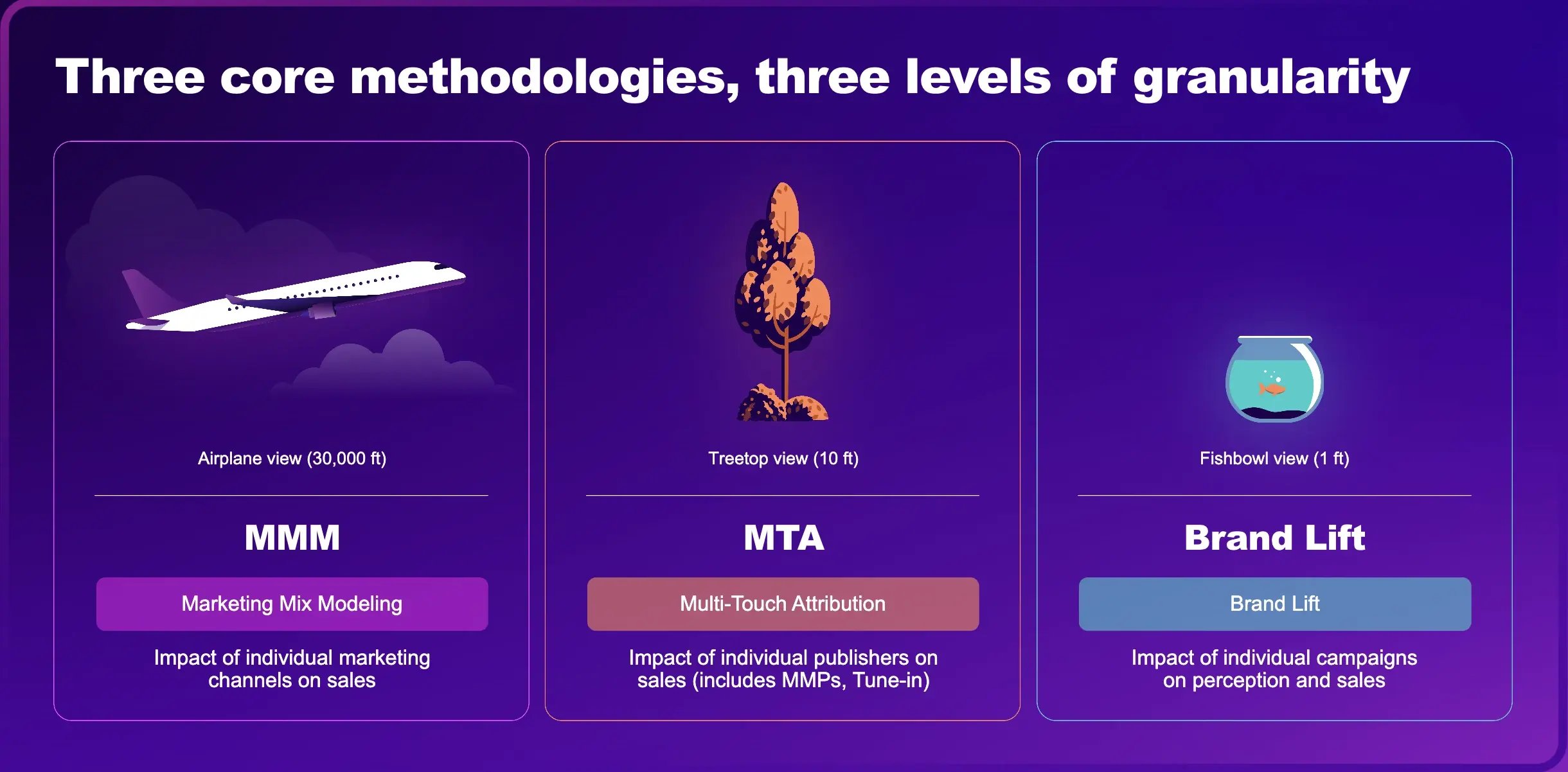
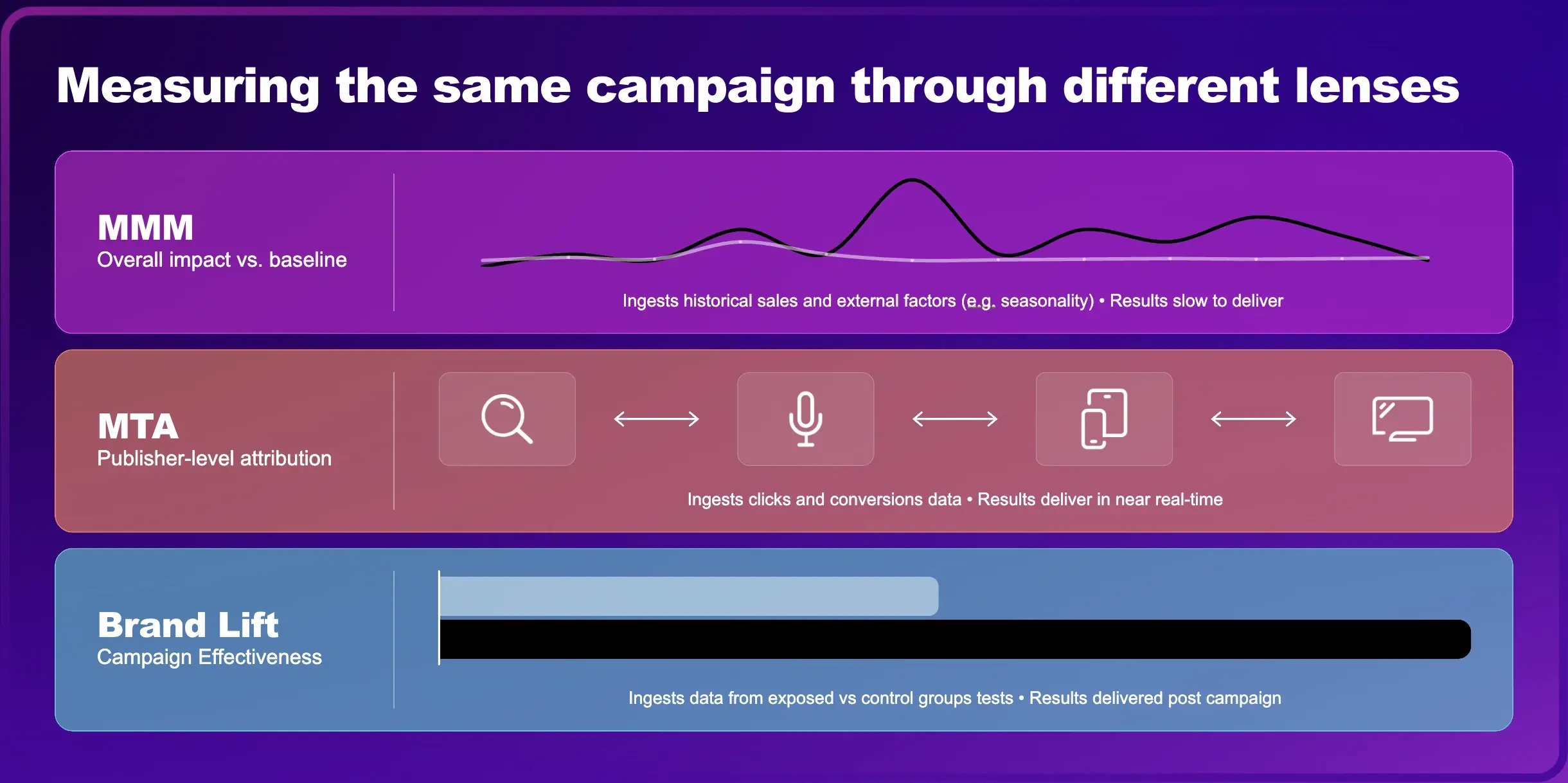
Multi-touch attribution (MTA) is a bottom-up method that distributes credit for a conversion across the individual touchpoints that preceded it within a defined lookback window. It is correlative, not causal.
The question it answers: How do individual touchpoints share credit for a conversion, and what is CTV’s role in the path? MTA offers a fast, always-on assessment that pairs well with in-flight optimization.
How to represent CTV correctly: Start with the most basic fix: view-through logic.
Most CTV ads aren’t clickable, so any click-based model assigns them zero credit by design. That’s not a measurement finding; it’s a measurement setting.
For example, last touch models will inherently be biased towards a platform a consumer can ‘convert’ on, usually digital or social. Imagine the purchase journey is a soccer team: the ball is passed from player to player down the field, until the final player scores a goal. Last-touch attribution would only give “credit” to the player who scores the goal, but every player who kicked the ball down the field deserved credit in scoring the point. In this case, CTV is one of the upfield players.
Therefore, any model must resolve identity across devices. Many journeys start on the TV and convert on a phone or laptop. Deterministic matching keeps that thread intact. Once you’ve dialed in identity resolution across devices, select your attribution window to match how streaming actually converts: Roku’s incrementality solution for media and entertainment brands gives flexible windows based on the decision to install an app—versus sign up for a streaming service.
Because some purchase journeys are longer than others, models must also pair durable server-to-server signals like a conversion API, so the measurement doesn’t degrade as browser-based signals do.
Be clear-eyed about what MTA is: Correlative, not causal. Multi-touch attribution distributes credit for conversions inside a lookback window (including conversions that would have happened anyway). That makes it excellent for day-to-day optimization and the wrong tool, on its own, for a major investment decision.
Ask your MTA vendor: Is the model data-driven, or a rules-based approach that structurally shortchanges upper-funnel channels? Does the attribution window reflect how long streaming takes to convert?
Takeaway: MTA is the optimization layer—fast, granular, and honest only when its logic can see an unclickable channel.
If you’re evaluating how CTV shows up in your models, Roku’s measurement team and Measurement Partner Program can help you get the setup right.