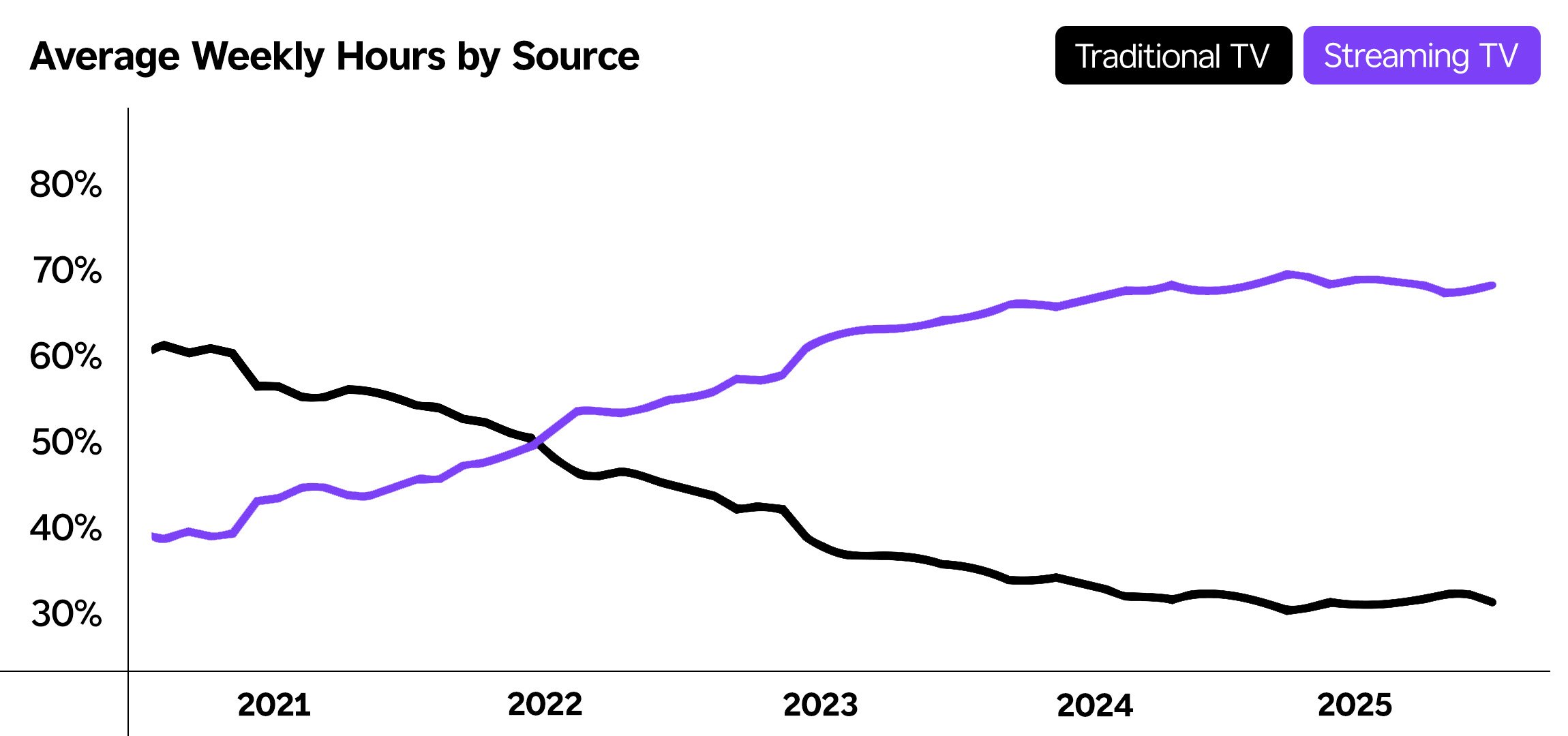
Streaming has grown up fast. From its early days as a niche alternative to broadcast and cable, Connected TV (CTV) has ballooned to become the primary way people watch TV. It now accounts for more than 48% of all U.S. TV viewership — more than broadcast and cable combined.
Yet many advertisers still treat CTV as an emerging channel, in part because its mechanics are markedly different from traditional TV. It’s true that streaming is more akin to digital media than to linear TV, with dozens of platforms, apps, formats, and data partners. Therefore it can feel harder to navigate than a traditional TV buy.
This guide cuts through that complexity. Whether you're a brand evaluating CTV for the first time, a growth marketer looking to start small and expand, or a media buyer trying to understand how to run campaigns at scale, here's what you need to know.
What is CTV?
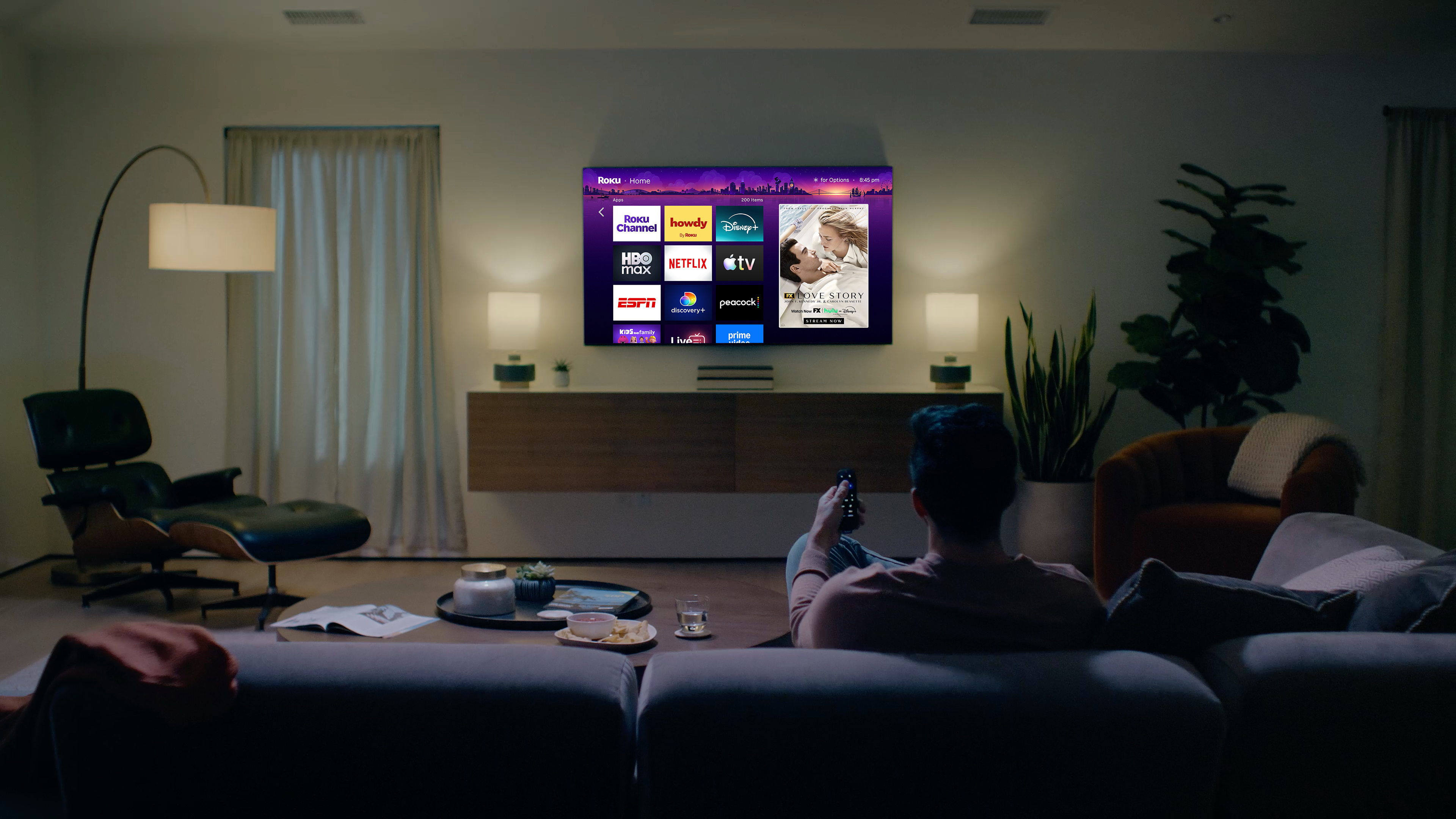
CTV refers to TV, movies, sports and other entertainment consumed on any internet-connected television. That includes smart TVs, streaming sticks and boxes, and gaming consoles. When a viewer watches Hulu, HBO Max, Peacock or ESPN+ on their television, rather than a phone or laptop, they're watching on CTV.
Key terms to know:
-
CTV (Connected Television): A television that is connected to the internet allowing viewers to watch streaming apps. A CTV setup can be a smart TV with built-in streaming apps, or a standard TV paired with a streaming device like a Roku streaming stick, Amazon Fire TV, Apple TV, or a gaming console.
- Linear TV: The traditional method of watching TV, via broadcast networks or cable channels.
- AVOD (Ad-Supported Video on Demand): Streaming content that’s available free or at reduced cost in exchange for ads. Examples include Hulu's ad-supported tier, Peacock with ads, or Tubi.
- SVOD (Subscription Video on Demand): Subscription-based streaming with no ads. Apple TV and HBO Max without ads are well-known examples.
- FAST (Free Ad-Supported Streaming TV): Linear-style channels delivered over the internet. They resemble traditional TV channels but are streamed. The Roku Channel carries hundreds of FAST channels.
Among these three environments, AVOD and FAST are the primary inventory environments where your ads will appear. These are where ad-supported audiences watch and where most CTV buys will land.
Understanding the TV OS
The CTV ecosystem has two primary layers: (1) individual streaming apps, and (2) the TV operating system (TV OS). Understanding the difference is essential for any CTV buy.
A streaming app like Disney+ or Hulu sells ad inventory across its own content. Buying at the app level gives you reach within that app's viewing environment.
A TV OS runs the television itself and hosts all streaming apps. Buying through a TV OS gives you reach across different apps that run on that platform — which may include Disney+, HBO Max, Paramount+ and a great many more — through a single buying relationship.
In the U.S., Canada, and Mexico, Roku is the leading TV OS by hours streamed, with 100+ million households. 69% of Roku platform users are cordless, meaning they cannot be reached on linear TV, and 38% cannot be reached on any other streaming device. As of 2026, over 77 million Americans have “cut the cord” and now only watch via CTV. Buying CTV ads through the OS layer helps you close that gap and reach hard-to-find audiences.
Marketer takeaway: Go beyond buying CTV at the app level. TV OS-level buying gives you cross-app reach, unified targeting, and consistent measurement across an entire platform ecosystem. This creates a fundamentally different kind of scale and efficiency than buying one app at a time.
How CTV advertising works
CTV advertising merges the broad reach of traditional TV with the precision of digital. Like linear TV, streaming apps carry ad breaks within content. But unlike linear, every impression on Roku is addressable, measurable, and tied to a logged-in or authenticated user. In this way, a streaming ad buy has more in common with digital advertising.
Additionally, CTV is not limited only to video ads, but also includes native ads integrated within a TV OS, as well as interactive and shoppable formats.
- In-stream video: Standard 15- to 30-second spots, with options to run shorter and longer ads. Non-skippable in most premium environments, these units are the nearest equivalent to a traditional TV spot.
- Native placements: Ads that appear on the TV home screen, within content carousels, or in branded destination environments. These ads are deeply embedded in the viewing experience rather than shown during a show or movie. Home screen ads in particular have greater reach than any individual streaming app.
- Interactive formats (Action Ads): Video ads with interactive overlays that let viewers take actions directly from their TV remote, without leaving their screen. Potential actions include browsing products, scanning QR codes, or clicking to have links sent to their phones.
- Shoppable formats: A subset of Action Ads, these are integrated with commerce platforms like Shopify. Shoppable CTV ads let viewers browse and purchase without switching devices.
Targeting: reaching the right audience on streaming TV
CTV makes household-level audience targeting possible at TV scale.
On linear TV, targeting is very broad: demographic and geographic at best, including age, gender, and DMA. On CTV, targeting can be much more granular. You can deliver ads based on audience interests, purchase behaviors, and other factors, down to the ZIP code level.
The reason is simple: CTV users are connected to the internet via trackable IP addresses, providing data about what they are watching and where they are located, already an improvement over traditional tv viewership estimates.
In fact, many CTV platforms, including Roku, have direct relationships with authenticated users, meaning they are real viewers logged into a Roku account. The behavior of these logged-in viewers is deterministically linked to a device and household.
Roku has first-party relationships with more than 100 million streaming households and has extended this footprint through partnerships with platforms like Amazon and Google. You can leverage these integrations to build highly specific, intent-based audience segments at a scale that covers most U.S. streaming households.
CTV targeting capabilities:
- Demographic and geographic: Age, gender, HHI, and DMA. These are baseline for any TV buy
- Behavioral and content affinity: Genre preferences, streaming frequency, and content interests
- Purchase intent and retail signals: Data from commerce partners layered onto viewing data
- First-party data matching: CRM data matched to streaming households via clean room partnerships (available through managed service and programmatic buys)
- Category and vertical audience segments: Pre-built audiences for auto, grocery, financial services, CPG, and more
Marketer takeaway: First-party data quality varies significantly across CTV platforms. When evaluating audience targeting capabilities, prioritize platforms with authenticated user bases and reliable first-party data.
Measurement + performance: from impressions to outcomes
CTV advertising supports your measurement efforts across the full funnel — from reach verification to conversion tracking. This is one of the most meaningful differences from linear TV, where outcomes beyond awareness are difficult to prove.
You need to know if your media investments are working. CTV lets you measure outcomes and understand which actions or media drive the greatest business value. Understanding these interactions can help you optimize performance, track ROI, and invest where it matters most.
What you can measure on CTV:
- Reach and frequency: Verified impressions and unique household reach, deduplicated across apps and campaigns
- Brand lift: Awareness, consideration, and purchase intent, measured through third-party surveys integrated with campaign delivery
- Conversion tracking: Website visits, lead form completions, and purchases — tied to CTV ad exposures via pixel and API
- Attention metrics: View completion rates, dwell time and interactive engagement rates
Third-party verification builds trust and accountability in CTV advertising, giving you confidence in the effectiveness of your campaigns.
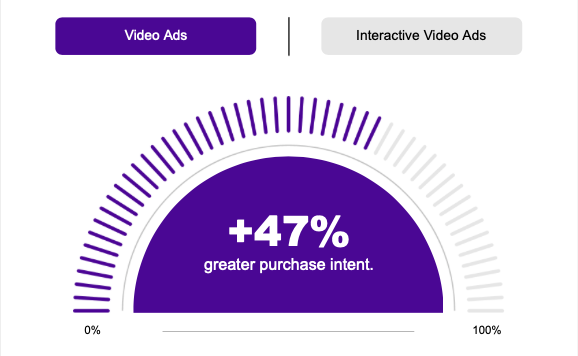
Third-party measurement partners — including iSpot, Nielsen, and Kantar — integrate directly with Roku to provide independent verification. That’s how we know that interactive Action Ads deliver a +47% increase in purchase intent and +31% increase in brand awareness vs. standard video ads.
Marketer takeaway: Ask every CTV platform what third-party measurement integrations are available before committing. Native analytics are useful; independent verification makes results defensible to internal stakeholders.
Getting started with CTV advertising on Roku
Roku offers two distinct buying paths: one built for large-scale, custom buys and another for self-serve campaigns. The right choice depends on your budget, team resources, and campaign goals.
1. Managed service and programmatic: for large-scale buys
If you are focused on high-investment campaigns — typically with agency or media-buying team support — Roku's managed service and programmatic options offer you deeper capabilities and more customization.
Who it's for: Media agencies, brand advertisers running national or multimarket campaigns, and programmatic buyers evaluating premium CTV inventory.
How it works:
- Programmatic: Use your preferred DSP to access Roku inventory through private marketplace deals or open auction bidding. This option is recommended for targeting precision, measurement integration, and campaign automation at scale.
- Managed service / direct buying: Under this option, you have a direct relationship with Roku's advertising sales team. Access custom formats, dedicated support, and creative flexibility. This path is best for multiformat campaigns with complex targeting or measurement requirements.
Capabilities
- Proprietary audience data reaching 100M authenticated households
- Clean room partnerships for first-party data matching
- Custom formats including Marquee Ad Video, Roku City placements, and Spotlight Ads
- Third-party measurement integrations with iSpot, Nielsen, and Kantar
- Full-funnel measurement, from reach to brand lift to conversion
2. Roku Ads Manager: self-serve, starting at $500
Roku Ads Manager is Roku's self-serve advertising platform. If you want to launch campaigns quickly, without a dedicated media-buying team or agency relationship, this option may be for you.
Who it's for: Direct-to-consumer brands, growth marketers, small-to-midsize businesses, and advertisers who want control of their campaigns and a low barrier to entry.
How it works:
- Set your own budget, beginning as low as $500
- Upload existing video creative or repurpose existing assets using tools like Spaceback
- Target by age for users 18+, gender, interests, geography, and more
- Measure results with pixel-based conversion tracking and the Roku Ads Manager conversion API
- Includes Action Ads and shoppable formats, including Shopify integration
Roku Ads Manager is the fastest path to launching a CTV campaign on a platform that reaches more than 125 million people daily. Advertisers are seeing strong results: LolaVie measured a 40% sales lift from its streaming TV campaign, while fatty15's Ads Manager campaign delivered 120% ROAS and 97,000+ page views.